

Stephen Hasner | Truck Accidents | August 6, 2026
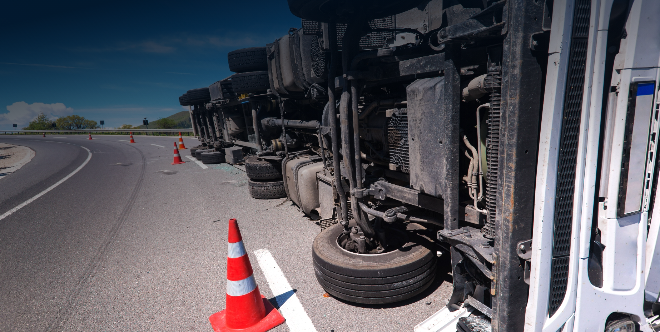
A truck brake failure accident in Georgia may support a negligence claim, a negligent maintenance claim, or a product liability claim, depending on why the brakes failed.
The motor carrier may be liable if it failed to inspect, repair, or maintain the truck. A maintenance contractor may be liable if it performed poor brake work. A brake manufacturer may be liable if a defective part caused the crash.
These cases often turn on maintenance records, driver inspection reports, FMCSA compliance history, and the condition of the brake system after the wreck.
The sooner that evidence is preserved, the easier it may be to prove who allowed an unsafe truck on the road.
Quick Answer: What legal claim can I bring after a truck brake failure accident in Georgia?
A truck brake failure accident in Georgia may give the injured party a negligence claim against the motor carrier, the maintenance contractor, or the brake component manufacturer. Liability depends on who was responsible for inspecting, maintaining, or manufacturing the brakes and whether they failed to meet federal safety standards under the Federal Motor Carrier Safety Administration (FMCSA) regulations.
Key Takeaways About Truck Brake Failure Accidents in Georgia
- FMCSA regulations require motor carriers to inspect, maintain, and repair brake systems on every truck in their fleet, and a failure to meet those standards may support a negligence claim.
- Liability for a truck brake failure accident in Georgia may fall on the motor carrier, the third-party maintenance shop, the brake component manufacturer, or a combination of all three.
- Maintenance records, driver pre-trip inspection reports, and FMCSA compliance history are the primary evidence sources in a brake failure claim.
- Georgia’s modified comparative fault rule bars recovery if the injured party’s share of blame reaches 50% or more under O.C.G.A. § 51-12-33.
- A spoliation demand sent to the carrier and maintenance provider as soon as possible helps preserve the records that may show who failed to keep the brakes safe.
Who Bears Liability When a Truck’s Brakes Fail in Georgia?
Liability for a truck brake failure crash in Georgia depends on who was responsible for the brake system and where the failure occurred in the maintenance chain.
Multiple parties may share fault for the same brake defect, and Georgia law allows claims against each one.
The table below maps the most common brake failure causes to the parties who may bear liability.
| Brake Failure Cause | Potentially Liable Party | Key Evidence |
| Worn brake pads or linings not replaced on schedule | Motor carrier or third-party maintenance contractor | Maintenance logs, inspection reports, component replacement history |
| Out-of-adjustment brake chambers | Motor carrier or driver (missed pre-trip inspection) | Pre-trip and post-trip inspection reports, roadside inspection history |
| Defective brake drum, rotor, or caliper | Brake component manufacturer | Product recall notices, manufacturing records, failure analysis |
| Overheated brakes from overloading or excessive downhill operation | Motor carrier (dispatch) or cargo loading company | Weight tickets, dispatch records, route logs, delivery schedules |
| Air brake system leak or failure | Motor carrier or maintenance contractor | Air system test results, hose replacement records, shop work orders |
Each of these failure modes leaves a paper trail. The party that neglected, deferred, or overlooked the problem typically faces the strongest liability argument.
How Does the Motor Carrier’s Duty Differ From the Maintenance Contractor’s?
The motor carrier bears the primary regulatory obligation to keep every truck in its fleet in safe operating condition. Even when the carrier outsources brake maintenance to a third-party shop, the carrier remains responsible for verifying that the work was done correctly.
A third-party maintenance contractor bears its own liability if the shop performed the brake work negligently. Missed defects, improper adjustments, and failure to replace worn components during a scheduled service all point to the contractor’s negligence.
Georgia law may allow the injured party to pursue claims against both the carrier and the contractor at the same time.
What FMCSA Brake Maintenance Standards Apply to Commercial Trucks?
The FMCSA sets federal brake maintenance standards that apply to every commercial motor vehicle operating in interstate and intrastate commerce.
These regulations appear primarily in 49 CFR Part 393 (vehicle parts and accessories) and 49 CFR Part 396 (inspection, repair, and maintenance).
Which Brake Regulations Come Up Most in Georgia Crash Claims?
Several federal safety regulations are frequently examined in Georgia truck brake failure cases. When a carrier or driver does not follow these rules, the violation may be used as evidence of negligence, depending on the facts of the case.

Key regulations include:
- 49 CFR 396.3 requires motor carriers to systematically inspect, repair, and maintain all vehicles and equipment under their control, including brake systems.
- 49 CFR 396.13 requires drivers to review the most recent driver vehicle inspection report (DVIR), confirm the vehicle is safe to operate, and note any defects before driving.
- 49 CFR 393.47 establishes minimum performance and adjustment standards for braking systems, including allowable stroke limits.
If a carrier, driver, or maintenance provider fails to follow these standards and a brake defect contributes to a crash, that failure may support a negligence claim under Georgia law.
However, liability depends on the full set of facts, including maintenance history, inspections, and the condition of the brake system at the time of the accident.
What Maintenance Records Prove Negligence in a Brake Failure Case?
The maintenance and inspection records a carrier is required to keep under federal law are often key evidence in a Georgia truck brake failure lawsuit. These records show who touched the brakes, when, and what they found.
Which Records Matter Most?
Georgia truck accident attorneys typically target several categories of maintenance documentation when building a brake failure claim.
- The truck’s complete maintenance file, including every brake inspection, repair, and component replacement dating back at least one year before the crash
- Driver vehicle inspection reports (DVIRs) filed before and after each trip, documenting whether the driver noted brake problems
- Roadside inspection results from the FMCSA’s Motor Carrier Management Information System (MCMIS), showing any prior brake violations cited against the carrier or the specific truck
- Third-party shop work orders, invoices, and parts receipts documenting what brake components the contractor replaced or adjusted
- The carrier’s systematic maintenance schedule, showing whether brake inspections occurred on time or fell behind
A gap in the maintenance file, a missing DVIR, or a pattern of deferred brake repairs tells a story of neglect that the carrier and its defense team have difficulty explaining away at trial.
What Compensation May Be Available After a Brake Failure Truck Accident in Georgia?
A truck brake failure claim in Georgia may allow recovery of medical expenses, lost wages, pain and suffering, and property damage. Georgia’s modified comparative fault rule under O.C.G.A. § 51-12-33 allows recovery as long as the injured party’s share of fault stays below 50%.
When Might Punitive Damages Apply to a Brake Failure Case?
Georgia law under O.C.G.A. § 51-12-5.1 may allow punitive damages when the responsible party acted with willful misconduct or conscious disregard for safety.
A carrier that knowingly dispatched a truck with documented brake defects, or a maintenance shop that falsified inspection records, may face punitive liability on top of compensatory damages.
Brake failure cases tend to produce severe injuries because the truck has no way to stop or slow down before impact. Traumatic brain injuries, spinal cord damage, multiple fractures, and fatalities all appear in brake failure crash claims at higher rates than in standard rear-end collisions.
The severity of those injuries drives the damages calculation and the length of the claim.
Hasner Law’s Approach to Truck Brake Failure Claims in Georgia
Hasner Law has recovered more than $1 billion in settlements and verdicts for injured clients across Georgia. Every case is different, and prior results do not guarantee a similar outcome.

Our attorneys bring more than 100 years of combined experience across personal injury and workers’ compensation cases, and truck accident claims involving maintenance negligence are a regular part of our caseload.
How Do We Build the Maintenance Negligence Case?
Senior Attorney Pearce Taylor spent years on the defense side of trucking disputes before joining our team. That background shapes how we obtain and analyze the carrier’s maintenance file, the contractor’s work orders, and the FMCSA compliance history.
We typically send spoliation demands to the carrier and every maintenance provider on the day you hire us. Those demands preserve the brake inspection records, component replacement logs, and DVIRs before the carrier has a chance to alter, discard, or overwrite them.
The truck itself is also a piece of evidence, and we take steps to prevent it from being repaired or returned to service before our team examines the brake system.
Ask Hasner Law
A truck rear-ended me on I-75 and I think the brakes failed. How do I prove that?
Proving brake failure in a Georgia truck accident requires the truck’s maintenance records, the driver’s pre-trip inspection reports, and often a physical examination of the brake components themselves.
Your attorney sends a spoliation demand to the carrier on the day you hire us, locking down those records before anyone repairs the truck or discards the documentation.
Roadside inspection history from the FMCSA database may also show prior brake violations on the same vehicle or within the carrier’s fleet.
The trucking company’s insurer says the crash was caused by road conditions, not brakes. How do I challenge that?
The carrier’s insurer may blame wet roads, steep grades, or traffic congestion to deflect from brake maintenance failures.
Maintenance logs, brake adjustment records, and component replacement history tell a different story when the brakes were out of specification at the time of the crash.
An accident reconstruction professional may also analyze stopping distance, skid marks, and impact data to determine whether properly maintained brakes would have prevented the collision.
If the truck had a recent inspection, does that mean the brakes were fine?
Not necessarily. A passing roadside inspection or a recent shop visit does not prove the brakes were functioning properly at the time of your crash.
Brake conditions change between inspections, and a maintenance provider may have missed a defect or improperly adjusted the system during the last service.
The inspection and shop records still become part of the evidence file because they show what the provider examined, what they noted, and what they may have overlooked.
FAQs for Truck Brake Failure Accidents in Georgia
How long do I have to file a lawsuit after a truck brake failure accident in Georgia?
Georgia gives you two years from the date of the crash to file a personal injury lawsuit under O.C.G.A. § 9-3-33.
Because brake failure evidence degrades quickly once the truck returns to service, contacting an attorney well before that deadline protects the physical and documentary evidence your case needs.
If the brakes failed, does that mean the driver is not at fault?
Not necessarily. The driver may share fault if the pre-trip inspection report shows the driver noticed brake problems but continued driving, or if the driver failed to conduct the required inspection at all.
Brake failure cases often involve shared liability among the driver, the carrier, and the maintenance provider.
What if the brake component itself was defective from the manufacturer?
You may have a product liability claim against the brake manufacturer under Georgia law.
A defective drum, rotor, caliper, or air brake valve that failed under normal use may point to a manufacturing or design defect.
Preserving the failed component is a priority because the manufacturer’s defense team will argue the failure resulted from wear or improper maintenance, not a defect.
How much does it cost to hire a lawyer for a truck brake failure case?
Hasner Law handles truck accident cases on a contingency fee basis. No Fee Unless We Win. You pay nothing up front, and your first consultation is free.
What if the trucking company destroys the maintenance records?
Destroying maintenance records after a crash may constitute spoliation of evidence.
Georgia courts may impose sanctions on a party that destroys relevant records, including adverse inference instructions that allow the jury to assume the missing records contained information harmful to the carrier’s defense.
Sending a formal preservation demand immediately after the crash creates a documented obligation for the carrier to retain all relevant records.
Get the Truck’s Brake Records Before They Disappear After Your Georgia Accident

Truck brake records can be key evidence after a Georgia truck accident. But they may not be available for long.
After a crash, the trucking company may repair the brakes, put the truck back on the road, or discard records after the required retention period ends.
These records can help show whether brake failure, poor maintenance, missed inspections, or worn brake parts contributed to the crash. They may also help connect the trucking company, maintenance provider, or parts contractor to what went wrong.
Hasner Law represents injured people in Atlanta, Savannah, Kennesaw, and nearby Georgia communities.
Our Georgia truck accident attorneys work to obtain brake repair records, FMCSA inspection history, maintenance logs, and brake component information from trucking companies and their contractors before key evidence is lost or changed.
Call (678) 888-4878 for a free consultation. No Fee Unless We Win.
