
Atlanta Workplace Accident Attorneys
Atlanta workplace accident attorney services help injured workers protect their rights when employers and insurers control the claims process.
In Georgia, your employer selects the insurance carrier, approves your medical providers, and influences how benefits are paid. This system can create delays, disputes, or denied claims when you need support the most.
An Atlanta workplace accident attorney at Hasner Law steps in to manage your claim, enforce your rights under Georgia workers’ compensation law, and identify any third-party liability that may increase your recovery.
We represent injured workers across Fulton, DeKalb, Cobb, and Gwinnett counties in both workers’ compensation and personal injury claims arising from on-the-job accidents. Call (678) 888-4878 for a free consultation. No Fee Unless We Win.
Why Do Atlanta Workers Trust Hasner Law After a Workplace Accident?
Our attorneys bring more than 100 years of combined experience handling personal injury and workers’ compensation cases across Georgia. Hasner Law has recovered more than $1 billion for injured clients, and workers’ comp makes up a major share of our practice.
What Experience Do Our Attorneys Bring to Workplace Accident Claims?
Managing Partner Stephen Hasner co-founded the Georgia Injured Workers’ Advocates (GIWA) and chairs the Workplace Injury Network Political Action Committee (WIN-PAC). He built his career representing injured workers after spending his early years on the defense side of insurance disputes.
Senior Attorney Judy Blackwell spent six years as an Administrative Law Judge (ALJ) at the Georgia State Board of Workers’ Compensation, presiding over more than 500 cases. She knows what evidence carries the most weight in hearings because she evaluated it from the bench.
Senior Attorney Pearce Taylor and Attorney Akash Patel both started their careers defending employers and insurers in workers’ comp disputes. That combined background helps our team anticipate the strategies the carrier plans to use against your claim.
How Does Hasner Law Handle Your Workplace Injury Claim?
We direct the insurer to route all claim-related communication through our office once you hire us. That stops direct adjuster pressure and protects you from giving recorded statements without legal guidance.
- We file all required forms with the State Board, including the WC-14 Notice of Claim
- We review the Panel of Physicians for compliance and advise you on selecting a treating doctor
- We audit your average weekly wage (AWW) calculation to verify the insurer is paying the correct rate
- We identify whether a third-party personal injury claim applies alongside your workers’ comp case
- Bilingual legal support is available in English and Spanish
Having both the workers’ comp and third-party sides of a workplace accident case handled under one roof prevents gaps that separate firms might miss.
Is It Possible to Sue Your Employer After a Workplace Accident in Georgia?
Georgia’s workers’ compensation system under O.C.G.A. Title 34, Chapter 9 bars most lawsuits against your employer for on-the-job injuries.
Workers’ comp provides medical benefits and partial wage replacement without requiring you to prove fault. In exchange, your employer receives immunity from personal injury lawsuits.

When Does a Third Party Open a Separate Lawsuit?
A third-party claim applies when someone other than your direct employer caused or contributed to your workplace accident.
Georgia law allows injured workers to file a workers’ comp claim and a separate personal injury lawsuit against that third party at the same time.
- A subcontractor whose crew created an unsafe condition on a shared job site
- An equipment manufacturer that produced a defective tool, harness, or machine
- A property owner who failed to correct a known hazard on the premises
- A delivery driver employed by another company who caused a vehicle collision on the work site
Each of these scenarios involves a negligent party outside your employment relationship. A third-party lawsuit may recover full lost wages, pain and suffering, and other damages that Georgia workers’ comp does not pay.
What Types of Workplace Accidents Lead to Injury Claims in Atlanta?
The U.S. Bureau of Labor Statistics (BLS) reported that private industry employers recorded 2.5 million nonfatal workplace injuries and illnesses nationally in 2024.
Atlanta’s mix of construction, warehousing, healthcare, hospitality, and airport operations contributes to workplace accident patterns that reflect those national trends.
Which Accident Types Are Most Common Across Atlanta Industries?
Workplace accidents in metro Atlanta vary by industry, but certain categories appear repeatedly in workers’ comp filings and third-party claims. The type of accident shapes both the injuries involved and the legal path for recovery.
| Accident Type | Common Atlanta Industries | Potential Third-Party Liability |
| Falls from heights | Construction, roofing, building maintenance | Scaffolding supplier, general contractor, property owner |
| Struck-by incidents | Construction, warehousing, logistics | Equipment operator’s employer, crane rental company |
| Machinery entanglement | Manufacturing, food processing, printing | Equipment manufacturer, maintenance contractor |
| Repetitive motion injuries | Healthcare, warehouse fulfillment, assembly | Ergonomic equipment manufacturer |
| Vehicle collisions during work | Delivery, airport ground operations, field service | Other driver, vehicle manufacturer, fleet maintenance company |
| Toxic exposure | Industrial cleaning, painting, chemical handling | Chemical manufacturer, property owner who failed to ventilate |
Not every workplace accident involves a third party. But when one does, a separate personal injury claim may recover compensation that goes far beyond what workers’ comp provides.
How Do OSHA Reports Affect a Workplace Injury Claim in Georgia?
An Occupational Safety and Health Administration (OSHA) citation at your job site may serve as evidence that a safety standard was violated before your accident.
OSHA sets federal safety requirements for most private-sector workplaces through its standards under 29 CFR Part 1910 for general industry and 29 CFR Part 1926 for construction.

How Does an OSHA Violation Help Prove Negligence?
An OSHA violation does not automatically prove liability. But it documents a specific safety failure at a specific time and location. When that failure lines up with how your accident happened, it strengthens both your workers’ comp claim and any third-party lawsuit.
- Failure to provide fall protection at heights above the regulatory threshold
- Missing or defective lockout/tagout procedures on industrial equipment
- Inadequate hazard communication for chemicals stored or used on site
- Blocked egress routes or missing emergency equipment in a warehouse or factory
OSHA inspection records are public documents. Your workplace accident lawyer at Hasner Law requests those records directly and uses them alongside witness statements, maintenance logs, and medical documentation to build your case.
Call (678) 888-4878 if your employer received an OSHA citation related to your accident.
What Compensation May Be Available After a Workplace Accident in Atlanta?
A workplace injury claim in Georgia may involve workers’ comp benefits, a third-party personal injury claim, or both. The type of claim determines which categories of compensation you may recover.
Workers’ Comp Benefits Under Georgia Law

Georgia workers’ comp typically pays two-thirds of your average weekly wage, subject to a state cap. Income benefits for non-catastrophic injuries may last up to 400 weeks.
Medical treatment related to the workplace injury is covered through employer-approved providers.
Workers’ comp does not pay for pain and suffering, emotional distress, or full income replacement. Those gaps are where a third-party claim fills in.
Third-Party Claim Damages
A third-party personal injury claim following a workplace accident may include full lost wages, reduced future earning capacity, pain and suffering, emotional distress, and disfigurement.
Georgia’s modified comparative negligence rule under O.C.G.A. § 51-12-33 reduces your recovery by your percentage of fault and bars it entirely at 50% or more.
In rare cases involving extreme recklessness, Georgia law may also allow punitive damages under O.C.G.A. § 51-12-5.1.
Ask Hasner Law
I got hurt at work but my employer says I am an independent contractor. Do I still have a claim?
Georgia law looks at the actual working relationship, not the label on your pay stub. If your employer controls how, when, and where you perform your work, you may qualify as an employee with full workers’ comp rights.

Some employers misclassify workers as independent contractors to avoid carrying coverage. An Atlanta workplace accident attorney reviews the facts of your arrangement and determines which legal options apply.
The insurance company sent me to a doctor who says I am fine. Do I have options?
The doctor chosen from your employer’s Panel of Physicians may not agree with how you feel.
If you believe the authorized treating physician is not accurately diagnosing or treating your condition, Georgia law provides procedures for requesting a change of physician or obtaining an independent evaluation.
An on-the-job injury attorney in Atlanta reviews your panel and advises you on the options available under the Board’s rules.
My workplace accident involved a vehicle owned by another company. Does that change my claim?
Yes, a vehicle collision caused by a driver employed by a different company opens a third-party personal injury claim in addition to your workers’ comp case.
You may pursue full lost wages, pain and suffering, and other damages against the negligent driver and their employer.
Workers’ comp still covers your medical bills and partial wage replacement through your own employer’s insurer while the third-party claim proceeds separately.
FAQs for Atlanta Workplace Accident Attorneys
How long do I have to file a workplace accident claim in Georgia?
Georgia requires injured workers to report the accident to their employer within 30 days under O.C.G.A. § 34-9-80.
You then generally have one year from the date of injury to file a formal claim with the State Board under O.C.G.A. § 34-9-82.
The deadline may extend based on whether your employer has provided medical treatment or wage benefits, so confirming your specific timeline with a lawyer protects your claim.
How much does it cost to hire an Atlanta workplace accident attorney?
Hasner Law takes every workplace accident case on a contingency fee basis. No Fee Unless We Win.
You pay no upfront costs, and attorney fees in Georgia workers’ comp cases are subject to approval by the State Board. Your first consultation is free.
What if my employer retaliates after I file a workers’ comp claim?
Georgia is an at-will employment state, which makes retaliation cases complicated. Filing a workers’ comp claim does not stop your right to receive benefits even if your employer terminates you.
If your employer takes action against you because you filed a claim, speak with a lawyer immediately. You may still have workers’ comp rights, and other employment protections may apply depending on the facts.
What if I was partly at fault for my workplace accident?
Workers’ comp in Georgia is a no-fault system, so your own negligence generally does not bar your claim.
However, if you were intoxicated, violated a safety rule, or intentionally caused your injury, the insurer may raise those facts as grounds for denial. A workplace injury claim in Georgia requires specific evidence to overcome those defenses.
What types of injuries qualify for a workers’ comp claim in Georgia?
Any injury caused by a workplace accident that arose out of and during the course of your employment may qualify for workers’ comp in Georgia.
Qualifying injuries include fractures, back injuries, traumatic brain injuries, burns, repetitive stress conditions, and occupational illnesses. The injury does not need to be catastrophic to qualify. Even soft tissue injuries and sprains may support a valid claim.
Start Your Atlanta Workplace Accident Claim with Hasner Law

Your employer’s insurer is already reviewing your claim and looking for reasons to limit what it pays. The adjuster assigned to your case does not represent your interests.
Every recorded statement you give, every doctor visit through the panel, and every form you sign feeds into the carrier’s strategy.
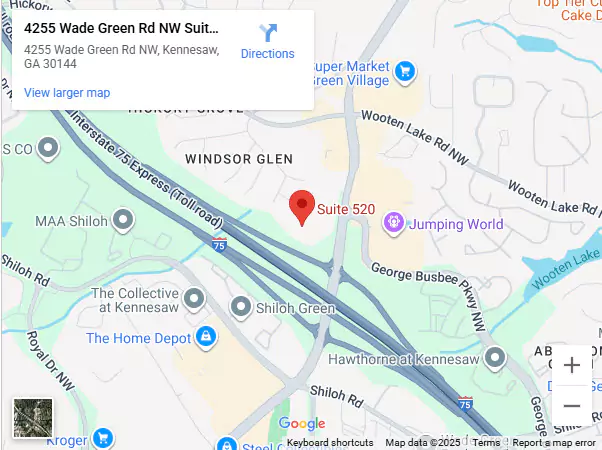
Hasner Law represents injured workers across Atlanta, Decatur, Marietta, Kennesaw, and surrounding communities in Fulton, DeKalb, Cobb, and Gwinnett counties.
Our attorneys handle both the workers’ comp and third-party sides of workplace accident cases at the Georgia State Board and in Georgia courts.
Call (678) 888-4878 for a free consultation with an Atlanta workplace accident attorney. No Fee Unless We Win.