

Stephen Hasner | Bicycle Accidents | June 2, 2026

In many Georgia bicycle accident cases, drivers assume they had the right of way, and insurance adjusters often accept that assumption. That pattern can put injured cyclists at a disadvantage from the moment a claim is filed.
But bicycle accident liability in Georgia does not turn on assumptions. It depends on which party violated the rules of the road. Because Georgia law generally treats bicycles as vehicles, cyclists and drivers share many of the same legal duties.
Even so, injured riders often find that blame shifts toward them by default, regardless of the driver’s conduct. That default assumption is not the law.
Georgia statutes impose specific duties on drivers when they encounter cyclists, and a driver’s violation of those duties may be strong evidence of fault.
Who’s at fault when you’re hit in a bicycle accident in Georgia?
In Georgia, fault for a bicycle accident depends on who was negligent. A driver may be liable for hitting a cyclist, but the cyclist, a government agency, or a defective bike or vehicle part manufacturer could also share responsibility. Under Georgia’s modified comparative fault rule, an injured cyclist generally cannot recover compensation if they are 50% or more at fault for the crash.
Key Takeaways About Bicycle Accident Liability in Georgia
- Georgia’s modified comparative fault rule bars cyclists from recovering compensation if their share of fault reaches 50% or more.
- Drivers must leave at least three feet of space when passing a cyclist and avoid unsafe encroachment into designated bike lanes under Georgia law.
- Not wearing a helmet does not make an adult cyclist legally at fault in Georgia, but insurers may still use it to argue for a reduced payout.
- Fault may fall on the driver, a government agency, a property owner, or a product manufacturer depending on the circumstances.
- The strength of the evidence matters as much as the facts themselves, making early documentation a priority after any bike crash.
How Does Georgia Determine Fault in a Bicycle Accident?
Georgia determines bicycle accident fault based on which party failed to exercise reasonable care. The legal term for that failure is negligence, which means acting in a way that a careful person in the same situation would not.
What Counts as Driver Negligence in a Georgia Bike Crash?
A driver acts negligently by violating traffic laws or operating a vehicle without reasonable caution around a cyclist.
Georgia courts and insurance adjusters look at specific behaviors when assigning fault to the driver.
- Passing a cyclist with less than three feet of clearance
- Unsafely encroaching into a designated bicycle lane
- Opening a car door into the path of an oncoming rider
- Running a red light or stop sign at an intersection where a cyclist had the right of way
- Texting or using a phone while driving near a cyclist
Any of these behaviors may establish the driver’s negligence. But insurance companies rarely concede fault without resistance, even when the violation is obvious from the police report.
Does Georgia’s Comparative Fault Rule Apply to Bicycle Accidents?
Yes, Georgia’s modified comparative fault rule applies to every bicycle accident claim in the state.
Under the Official Code of Georgia Annotated (O.C.G.A.) § 51-12-33, an injured cyclist’s compensation decreases in proportion to their percentage of fault. If that percentage reaches 50% or more, the cyclist recovers nothing.
How Does the 50% Bar Work in a Bike Crash Claim?
Georgia’s 50% bar means that a cyclist assigned half or more of the blame loses the right to collect any damages. The table below shows how different fault assignments affect a $200,000 bicycle accident claim in Georgia.
| Cyclist’s Fault Percentage | Total Damages | Reduction for Fault | Amount Cyclist Recovers |
| 10% | $200,000 | $20,000 | $180,000 |
| 25% | $200,000 | $50,000 | $150,000 |
| 30% | $200,000 | $60,000 | $140,000 |
| 49% | $200,000 | $98,000 | $102,000 |
| 50% or more | $200,000 | N/A | $0 (barred from recovery) |
Insurance adjusters know this math and use it strategically. They look for any cyclist behavior that might push fault toward the 50% threshold. Riding without lights at night, ignoring a bike lane, or failing to signal a turn all give the adjuster leverage.
The comparative fault fight often comes down to evidence. The party with stronger documentation of what happened typically controls how the percentages get assigned.
What Georgia Bicycle Laws Affect Fault Determination?
Georgia’s bicycle-specific statutes directly affect how fault gets assigned after a crash. Both cyclists and drivers have legal obligations under state law, and violating any of these rules may serve as evidence of negligence in a liability claim.
What Rules Must Cyclists Follow Under Georgia Law?
Georgia requires cyclists to follow the same traffic laws as motor vehicles under O.C.G.A. § 40-6-294, plus additional rules specific to bicycles.
- Ride as near to the right side of the road as practicable, with exceptions for left turns, hazards, and narrow lanes
- Signal turns using hand signals before changing direction
- Ride no more than two abreast on a roadway unless on a designated bike path
- Use a front white light and rear red light or reflector when riding at night under O.C.G.A. § 40-6-296
A violation of any of these rules does not automatically make the cyclist fully at fault.
It gives the insurance company evidence to argue shared blame under Georgia’s comparative fault framework, which is why the rest of the evidence matters so much.
What Rules Must Drivers Follow Around Cyclists?
Georgia law places specific obligations on drivers who share the road with cyclists. Under O.C.G.A. § 40-6-56, drivers passing a bicycle must meet clear requirements.
- Move into a non-adjacent lane when road and traffic conditions allow
- If a lane change is not safe or legal, reduce speed and pass only when safe to do so while keeping at least three feet of clearance
- Maintain at least three feet between the vehicle and the bicycle at all times while passing
Drivers must also avoid unsafe encroachment into designated bicycle lanes and yield when required under general right-of-way laws.
A driver who violates any of these rules and causes a crash has strong evidence of negligence working against them in a bicycle accident liability claim.
Does Not Wearing a Helmet Affect Bicycle Accident Liability in Georgia?
Georgia law does not require adult cyclists to wear helmets. Only riders under 16 must wear one. An adult cyclist who rides without a helmet has not violated any state law and does not automatically share fault for a crash.
How Do Insurance Companies Use the Helmet Argument?
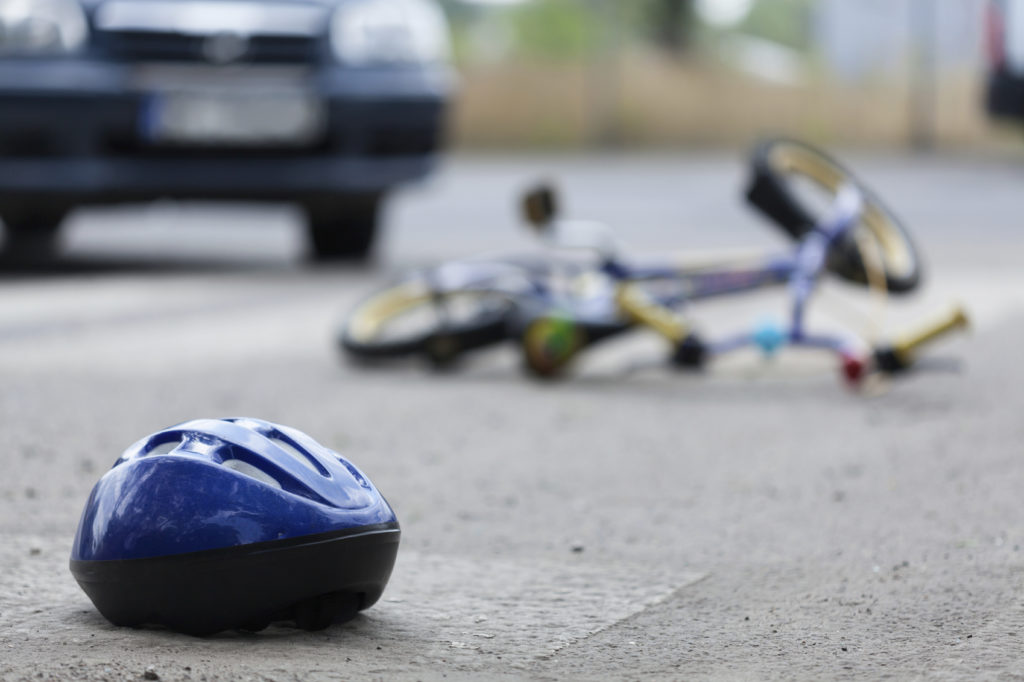
Insurance adjusters frequently argue that a cyclist’s head or brain injuries were more severe because the rider chose not to wear a helmet. This argument does not change who caused the crash. Instead, it targets the amount of compensation owed.
The adjuster’s goal is to reduce the payout by claiming the cyclist failed to limit the severity of their own injuries.
Georgia courts have addressed similar mitigation arguments in other personal injury contexts, and the outcome often depends on the specific medical evidence in each case.
The helmet argument typically affects damages more than liability, though insurers may attempt to frame it as comparative fault in some cases. How much weight it carries depends on the medical evidence and the specific injuries involved.
What If Someone Other Than the Driver Caused the Crash?
Bicycle accident liability in Georgia does not always fall on a driver. Other parties may share or bear full responsibility depending on the facts of the crash.
- A city or county government may be liable if a poorly maintained road, missing signage, or broken traffic signal along an Atlanta corridor or BeltLine crossing contributed to the collision
- The State of Georgia may be liable if a state-maintained highway or intersection played a role
- A bicycle manufacturer or retailer may face a product liability claim if a defective brake, fork, or wheel caused the crash
- A property owner may share responsibility if obstructed sightlines or unsafe conditions on their land contributed to the collision
Each of these parties has different notice requirements and legal standards. Claims against cities typically require written notice within six months, while claims against the state allow up to 12 months.
These deadlines and notice requirements are strict and include specific content and delivery rules. Identifying every liable party early protects the full value of a bicycle accident claim.
How Does Hasner Law Handle Bicycle Accident Liability Cases?
Hasner Law builds bicycle accident liability claims by identifying every party at fault and gathering evidence before the insurer locks in its version.
Managing Partner Stephen Hasner started his career representing insurance companies, so our team understands how adjusters evaluate fault in bike crash cases.
Senior Attorney Judy Blackwell spent six years as an Administrative Law Judge with Georgia’s State Board of Workers’ Compensation, presiding over more than 500 cases. Senior Attorney Pearce Taylor also came from the defense side.
That background helps our team anticipate common insurance strategies and build claims that counter them.
What Evidence Matters in a Bicycle Accident Liability Claim?
The evidence collected in the first days after a crash often determines how fault gets assigned. Our attorneys focus on gathering proof that directly addresses the insurer’s likely arguments.
- Police reports documenting the driver’s traffic violations or admissions at the scene
- Dashcam, security camera, or traffic camera footage showing the moments before and during the crash
- Witness statements from bystanders or other drivers who saw what happened
- Medical records linking specific injuries to the force and direction of the collision
- Photographs of road conditions, bike lane markings, signage, and vehicle damage
Gaps in documentation give adjusters room to shift blame toward the cyclist. The stronger the evidence file, the harder it is for the insurance company to inflate the cyclist’s share of fault.
Ask Hasner Law
What if the driver says the bike accident was my fault?
The driver’s version of events does not decide liability in Georgia. Fault depends on the evidence, including the police report, witness statements, camera footage, and traffic law violations.
Insurance adjusters review all available proof before assigning fault percentages. A driver’s claim alone does not override physical and documentary evidence that supports the cyclist.
Do I need a lawyer if a car hit me while I was riding my bike?
Speaking with a lawyer before accepting any settlement offer or giving a recorded statement is a good idea. Insurance adjusters in bicycle accident cases often try to assign partial blame to the cyclist to reduce payouts.
A lawyer reviews the evidence, identifies all liable parties, and handles negotiations. Hasner Law offers free consultations and charges no fees unless we recover compensation for you.
If I was not in the bike lane when I got hit, is the accident my fault?
Not necessarily. Georgia law does not require cyclists to ride in a bike lane at all times. Under O.C.G.A. § 40-6-294, cyclists must ride as near to the right side of the road as practicable, but exceptions apply for left turns, hazards, narrow lanes, and other conditions.
Riding outside a bike lane does not automatically shift full liability to the cyclist.
FAQs for Bicycle Accident Liability in Georgia
Does a police report determine who was at fault for a bicycle accident in Georgia?
No, a police report does not make a final determination of fault in a Georgia bicycle accident. The report documents the officer’s observations and may include a preliminary fault assessment. Insurance adjusters and juries review additional evidence before making their own determinations.
If I was riding on the sidewalk when I got hit, am I automatically at fault?
Not automatically. Georgia generally prohibits vehicles, including bicycles, from being operated on sidewalks, except where a local government has authorized sidewalk riding for children 12 or younger.
Even if riding on the sidewalk violated state or local law, that does not automatically make the cyclist fully at fault.
Georgia’s comparative fault rule still requires looking at how the crash happened, including the driver’s conduct, visibility, right of way, and whether either party could have avoided the collision/
How do insurance companies decide who was at fault for a bike accident in Georgia?
Insurance companies assign fault based on their own review of available evidence. Adjusters examine police reports, photos, medical records, and witness accounts.
They also review applicable traffic laws to determine whether either party committed a violation. Their goal is to minimize the payout, so their fault assessment does not always reflect the full picture.
Does wearing a helmet matter if I want to file a bicycle accident claim?
Helmet use does not determine bicycle accident liability in Georgia for adult riders. Georgia only requires helmets for cyclists under 16.
However, if you suffered a head injury without a helmet, the insurer may argue your injuries were more severe than they needed to be.
That argument typically affects the damage amount more than the fault determination, though some insurers may attempt to frame it as comparative fault.
If the driver got a traffic ticket after hitting me, does that prove they were at fault?
A traffic citation is strong evidence of negligence, but it does not guarantee a finding of liability on its own. The driver may still argue the cyclist contributed to the crash. A citation combined with supporting evidence like camera footage and witness testimony builds a stronger case for holding the driver responsible.
Protect Your Bicycle Accident Liability Claim in Georgia

Fault in a Georgia bicycle accident often depends on who builds the stronger evidence file first. The insurance company starts working on its version the day the claim gets reported. Every day without a response gives the adjuster more room to shift blame.
Hasner Law represents injured cyclists across Atlanta, Savannah, Kennesaw, and surrounding Georgia communities. Our attorneys handle bicycle accident liability claims in Fulton, DeKalb, Cobb, Chatham, and Gwinnett county courts.
Call 678-888-4878 to talk through the fault issues in your case at no cost.
