

Stephen Hasner | Workers' Compensation | January 18, 2026

The day of your workers’ compensation mediation can feel like the final moment of a long and difficult journey. You may be sitting across from an insurance adjuster who has challenged your benefits for months, and a mediator may be guiding the discussion as an offer is presented. In moments like these, many injured workers feel pressured to agree.
You are not required to settle. You have the right to decline any offer that does not reflect the value of your claim or support your future needs. This right is built into the mediation process and gives you the ability to protect your finances and medical care.
An experienced Atlanta workers’ compensation lawyer can review the offer, speak with the mediator and the insurer, and help you choose the best course for your case.
If you are heading into mediation and feel pressured to accept terms that do not serve you, contact Hasner Law. We help injured workers understand their options and move forward with confidence. Call 678-888-HURT (4878) for a free consultation.
Key Takeaways on Your Right to Refuse a Settlement
- While attending mediation is mandatory in most disputed Georgia workers’ comp cases, reaching a settlement is completely voluntary.
- You have the absolute right to refuse any settlement offer that you believe is unfair or inadequate to cover your future needs.
- Saying no to an offer is not a failure; it is a strategic decision to proceed to the next step in the legal process, which is a formal hearing before a judge.
- A reputable Atlanta workers’ compensation lawyer will provide a clear analysis of any offer and support your decision, whether you choose to accept or refuse.
- An insurance company cannot punish you for refusing an offer. Your case will simply continue on the path to a judicial decision based on its legal merits.
Georgia Mediation Is Mandatory but Settlement Is Optional
In Georgia, when a workers’ compensation claim is disputed and a hearing is requested, the State Board of Workers’ Compensation (SBWC) will almost always order the parties to mediation. This means your attendance is required by law. However, the law does not, and cannot, force you to reach an agreement.
Why Mediation Matters in Georgia Workers’ Compensation Claims
Mediation is a form of Alternative Dispute Resolution and is conducted under the rules of the Georgia Commission on Dispute Resolution.
Its purpose is to provide a structured setting where both sides can negotiate and work toward a voluntary agreement, often avoiding the time and cost of a formal hearing. A neutral mediator guides the discussion but does not have the authority to make any decisions.
It is important to understand how a mediator differs from a judge, and your Atlanta workers’ compensation lawyer will handle communication with both. Although each plays a role in resolving disputes, their functions are very different:
- A mediator facilitates negotiation; a judge adjudicates the law.
- A mediator has no decision-making power; a judge’s decision is a legally binding order.
- Mediation is a confidential and private process; a hearing is a public record.
- Mediation results in a voluntary agreement; a hearing results in a ruling.
This framework ensures that the power to settle remains firmly in your hands throughout the mediation process.
Valid Reasons for an Injured Worker to Refuse a Settlement
Saying no to a settlement offer is not a sign of being unreasonable. It is a calculated decision based on the facts of your case and your future needs. There are many valid and strategic reasons to refuse an offer presented by the insurance company.
When a Workers’ Compensation Settlement Offer Is Too Low
The most common reason many injured workers refuse a settlement is that the amount is too low. An insurance company’s first offer is often a fraction of the case’s true value. A fair settlement must account for all aspects of your loss.
Your Atlanta workers’ compensation lawyer will evaluate an offer based on several factors. If the offer fails to address these key components, it is not a fair offer.
- Future Medical Expenses: Does the offer include enough money to pay for potential future treatments, surgeries, or medications?
- Permanent Disability: Does the offer fairly compensate you for any permanent impairment you have suffered?
- Lost Earning Capacity: If you cannot return to your old job, does the offer account for a lifetime of reduced income?
- Total Value: Does the offer align with what a judge might award based on the strength of your medical evidence?
Accepting a lowball offer can be a devastating financial mistake, leaving you unable to afford the care you need down the road.
What Happens After Refusing a Workers’ Compensation Settlement Offer
Refusing to settle does not mean your case is over. It simply means that the negotiation phase was unsuccessful.
When you and the insurance company cannot reach an agreement, the mediator will declare an impasse. Your case is then placed back on the path toward a formal hearing.
What an Impasse Means in a Workers’ Compensation Case
An impasse is not a negative outcome. It is a formal recognition that the parties are too far apart to reach a voluntary agreement. At this point, your Atlanta workers’ compensation lawyer will begin the final preparations for a hearing before an Administrative Law Judge (ALJ).
The litigation process is structured and follows a clear set of steps. Knowing what to expect can reduce the anxiety associated with moving forward.
- Completing Discovery: Your attorney will finish taking depositions and gathering any final pieces of evidence.
- Filing Pre-Hearing Motions: Legal arguments may be filed with the judge to resolve certain issues before the hearing.
- The Hearing: Your attorney will present your case to the ALJ, including witness testimony and medical evidence.
- The Judge’s Decision: After the hearing, the ALJ will issue a written decision, known as an Award, that is legally binding.
This process is governed by the laws found in the Official Code of Georgia Annotated (O.C.G.A.) Title 34, Chapter 9.
Why Refusing a Low Workers’ Compensation Offer Can Strengthen Your Case
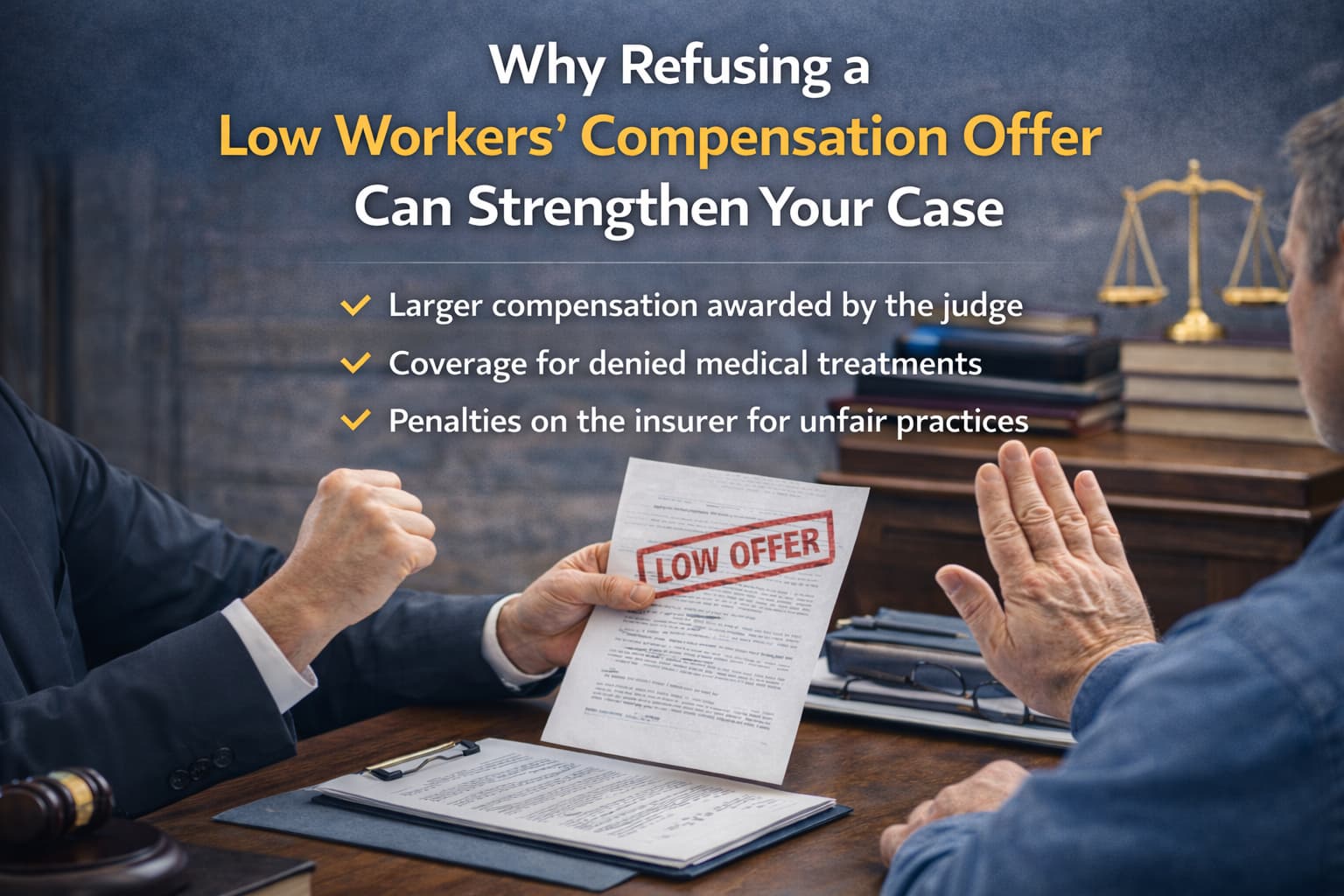
Sometimes, saying no is the most powerful move you can make. It sends a clear message to the insurance company that you know the value of your case and you will not be intimidated.
It demonstrates that you and your attorney are confident in your ability to win at a hearing. This confidence can sometimes prompt the insurer to come back with a much better offer before the hearing date.
The decision to proceed to a hearing is a strategic one, made with a clear understanding of the risks and rewards. An attorney can help you weigh these factors.
A hearing provides the opportunity to have a neutral judge make a final decision. While there is no guarantee of success, a strong case has many potential upsides.
- A judge may award more in benefits than the final settlement offer.
- A judge can order the insurer to pay for specific medical treatment they denied.
- A judge can penalize the insurer for late payments or unreasonable defenses.
This potential for a better outcome is why having the courage to refuse a bad settlement is so important.
How Hasner Law Protects You During Workers’ Compensation Settlement Negotiations
Choosing whether to settle a workers’ compensation claim is a major decision, and it should always remain in your hands. At Hasner Law, we prioritize empowering clients with the knowledge and guidance they need to make informed choices throughout the process, including during Georgia workers’ compensation mediation and any settlement discussions.
We clearly explain each step of the legal process, outline the implications of any proposed settlement, and ensure you are never pressured into accepting terms that do not serve your best interests. Our attorneys prepare every case as if it may proceed to a hearing before an Administrative Law Judge.
This thorough preparation enables us to evaluate settlement offers with a full understanding of the evidence, applicable legal standards, and the potential outcomes that could be achieved through litigation. While our experience helps inform our recommendations, no specific result can ever be guaranteed.
When reviewing a settlement proposal, we examine its fairness in light of your medical records, possible future treatment needs, and the legal issues at play. Whether negotiations occur informally or through Georgia workers’ compensation mediation, our goal remains the same: to help you understand your options so you can select the approach that best supports your circumstances and long-term interests.
FAQs for Atlanta Workers’ Compensation Lawyers
Will I look bad or get in trouble with the judge for refusing to settle?
No. Judges recognize that mediation is voluntary. They expect both sides to participate honestly, but they do not punish anyone for choosing not to settle. Your case will be decided based on the evidence and arguments presented in court, not on whether you agreed to a settlement during mediation.
What if my own lawyer is pressuring me to accept an offer I am not comfortable with?
That is a serious concern. Your attorney can give you guidance and share their professional opinion, but the final decision belongs to you. If you feel pushed toward an outcome you do not agree with, you are free to ask additional questions, slow the process down, or consult another attorney for a second opinion.
Can we still settle the case after mediation ends?
Yes. Settlement can happen at nearly any point before a final decision is made. Many cases settle after mediation concludes, sometimes even shortly before the hearing. Standing firm at mediation sometimes prompts the insurance company or opposing party to reconsider their position later.
Is the mediator on the insurance company’s side?
No. Mediators are neutral professionals who work to help both sides discuss the case and explore possible resolutions. They may challenge your position at times, but they should also challenge the other side. This approach helps clarify the strengths and weaknesses of each position and is not a sign of bias.
What is the biggest risk of refusing to settle?
The main risk is the uncertainty of a hearing. A settlement gives you a predictable outcome, while a judge’s decision can vary based on how they interpret the testimony and evidence. Even strong cases carry the possibility of a result that is less favorable than expected.
Protecting Your Future by Avoiding Unfair Workers’ Compensation Settlements
Deciding whether to settle your workers’ compensation claim is an important choice about your future. It affects the money you will have for medical care, your daily expenses, and your ability to support your family. Any settlement should reflect the impact of your injury and what you will need going forward.
You have the right to turn down any offer that does not match the real value of your claim. Insurance companies may try to make injured workers feel rushed or pressured, but the law gives you the final say. You are not required to accept an offer that falls short of what your case is worth.
Do not let stress or uncertainty push you toward a settlement that is too low. You can take your time, ask questions, and work with a lawyer who will explain your options and protect your interests throughout the process.
If you want guidance from a team that handles Georgia workers’ compensation claims every day, contact the Atlanta workers’ compensation team at Hasner Law. We provide clear information and a practical strategy to help you make confident choices. Call 678-888-HURT (4878) for a free consultation.