

Stephen Hasner | Slip and Fall | January 22, 2026
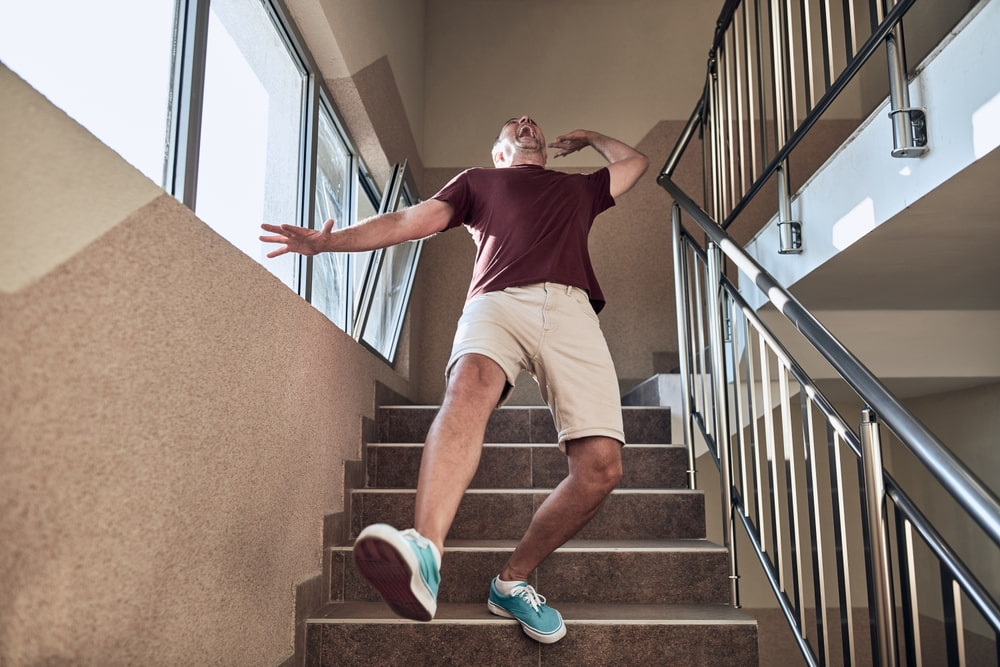
A fall on a staircase is very different from a fall on flat ground. Instead of hitting one surface, a person may strike several hard edges in rapid succession, which can lead to far more severe injuries.
Hazards such as uneven steps, loose handrails, and poor lighting make stairway accidents far more dangerous. Although these cases fall under premises liability, they are not handled the same way as simple floor-level slips. Stair accidents often involve construction flaws or building code violations that require careful investigation.
Building a successful claim usually starts with a close look at how the stairs were designed, built, and maintained. An Atlanta slip and fall lawyer can uncover safety violations, document hazardous conditions, and show how those failures led to your injuries.
Property owners have a responsibility to keep stairways safe. When they fail to do so, injured individuals can take legal action. For guidance and a detailed investigation into your case, contact the team at Hasner Law. Call 678-888-HURT (4878) today for a free case evaluation.
Key Takeaways on Slip and Fall Accidents on Stairs
- Falls on stairs often cause more severe injuries than ground-level falls due to the force of gravity and the potential for multiple impacts as the person moves down the stairs.
- These cases are legally distinct because they often involve violations of specific building codes and safety standards related to stair design and maintenance.
- Proving negligence often involves examining long-term structural problems, not just temporary issues like a spill.
- Property owners have a clear duty under Georgia law to ensure their staircases are properly designed, constructed, and maintained to be safe for visitors.
- An Atlanta slip and fall lawyer is essential for these cases, as they often require hiring engineers and code experts to prove that a staircase was dangerously defective.
How Stairway Falls Cause Severe Injuries
A fall on flat ground usually involves one impact. A fall on stairs creates multiple impacts as the body hits each step. This repeated force increases the chance of serious injuries and makes the fall harder to control.
Types of Injuries Commonly Caused by Stairway Accidents
Because stair edges, handrails, and tight spaces create repeated points of contact, these accidents often lead to significant trauma, such as:
- Traumatic Brain Injuries (TBIs): The head may strike steps or nearby surfaces several times, leading to concussions or more severe brain injuries that affect memory, balance, or behavior.
- Spinal Injuries: Twisting and sudden impacts can cause herniated discs, fractured vertebrae, or damage to the spinal cord, which can limit mobility.
- Fractures: Arms, legs, ribs, and other bones often break during stair falls due to repeated blunt force.
- Internal Injuries: Hitting step edges or railings can injure internal organs.
- Fatal Injuries: Older adults face a higher risk of death from severe stairway trauma.
Because stairway hazards can cause serious harm, property owners must follow safety standards. When they do not, an Atlanta slip and fall lawyer can help injured individuals understand their options for pursuing a claim.
Building Codes The Legal Backbone of a Stairway Fall Case
A staircase injury case typically relies on highly technical evidence. To establish a property owner’s negligence, the claimant often must show that the staircase was improperly designed, constructed, or maintained in violation of applicable building codes. Those codes are legally mandated minimum safety standards, and failing to meet them can support a finding of liability.
The Role of the International Building Code (IBC)
Most municipalities in Georgia, including Atlanta, have adopted a version of the International Building Code (IBC). This comprehensive set of regulations dictates the specific safety requirements for all aspects of a building, including stairways. An Atlanta slip and fall lawyer will often hire an expert to determine if the staircase in question complies with these codes.
A building code violation can be used as powerful evidence of negligence. It shows that the property owner failed to meet the minimum safety standards required by law.
Experts examine every part of the staircase to determine whether it meets required safety standards. Even a small deviation from the code can create a serious fall hazard.
- Stair Riser Height and Tread Depth: Codes require that all steps in a flight of stairs be uniform. Our brains expect consistency when we use stairs, and a small variation can easily disrupt a person’s rhythm and cause a trip.
- Handrail Height and Grippability: Handrails must be installed at a specific height and have a shape and size that is easy to grasp securely. A poorly designed handrail can fail in the exact moment it is needed most.
- Lighting Requirements: Stairwells must be adequately lit to ensure each step is clearly visible. The code specifies the minimum amount of light required.
- Surface Traction: The material used for the stair treads must have a non-slip surface, and the code sets standards for the coefficient of friction.
A violation of any of these technical standards can be the foundation of a successful premises liability claim.
Common Causes of Stairwell Falls Beyond the Obvious
While building code violations are a common cause of stair falls, other hazards related to poor maintenance and general negligence can also lead to serious accidents. A property owner’s duty under Official Code of Georgia Annotated (O.C.G.A.) § 51-3-1 is to exercise ordinary care, which includes addressing both structural and temporary dangers.
Maintenance Problems and Temporary Hazards That Lead to Stairway Accidents
Even a well-designed staircase can become dangerous if it is not properly maintained. Spills, debris, and unrepaired damage make a staircase unsafe for anyone who uses it.
A property owner’s duty to inspect their property for hazards is ongoing. Allowing these conditions to persist is a breach of their legal duty.
- Spills or Debris: Liquids, trash, grease from a nearby kitchen, or other objects left on the stairs.
- Worn or Damaged Treads: Carpeting that is torn or treads that are cracked, loose, and broken.
- Ice or Water: In outdoor stairwells, a failure to clear ice or water can lead to a fall.
- Burned-out Lightbulbs: Inadequate lighting that is not promptly addressed, plunging a stairwell into darkness.
Proving that the property owner had notice of these hazards is a key part of the legal case.
Challenges You May Face in a Stairway Slip and Fall Claim
Proving a slip and fall claim on a staircase is often more challenging than a ground-level fall case. The insurance company will aggressively defend these claims, often trying to place the blame entirely on the victim.
How Property Owners Use the Open and Obvious Defense in Stairway Fall Claims
One of the most common defenses is to argue that the hazard was open and obvious and that you should have seen and avoided it. For example, they might claim that a broken step was plain to see.
However, your Atlanta slip and fall lawyer can counter this by arguing that you were distracted by your surroundings or that you had no reason to expect a structural defect in a public staircase. The law does not require visitors to be on constant alert for dangers that should not exist.
How Comparative Negligence Affects Stairway Slip and Fall Compensation
Georgia’s modified comparative negligence rule means that if you are found to be 50 percent or more at fault for your fall, you are barred from recovering any damages.
Insurance companies will always try to argue that you were running, not paying attention, or not using the handrail to drive up your percentage of fault and defeat your claim. Their goal is to push your fault to that 50 percent threshold to avoid paying anything.
How Our Law Firm Investigates Stairway Injury Cases in Atlanta
A stairway fall case is more complex than an ordinary slip and fall. These cases often involve questions about engineering, design, and building code safety.
At Hasner Law, we have the experience and resources to handle this type of detailed investigation and litigation. We are trial attorneys who know how to prove when a structural problem contributed to an injury.
Our first step is to bring in qualified experts, including engineers and building code specialists, to closely examine the staircase where the fall occurred. We also send investigators to the scene to document conditions before anything can change.
They take accurate measurements, study each part of the stairway, and review whether there were earlier incidents that point to a pattern of unsafe conditions.
With more than 80 years of combined experience and over $1 billion recovered for clients, our team understands how to build strong premises liability cases in Georgia. We look carefully for signs of negligence, such as violations of the International Building Code, poor upkeep, or a history of prior falls.
The evidence we collect is used to develop a clear and persuasive case that insurance companies must take seriously. While we manage the investigation and the legal steps that follow, you can focus on your recovery.
FAQs for an Atlanta Slip and Fall Lawyer
Are slip and falls at work handled the same way as slip and falls in public places?
Not quite. Workplace slip and fall cases usually go through Georgia’s workers’ compensation system, which provides benefits without needing to prove employer negligence. In contrast, public-premises cases require showing fault. If a contractor, property owner, or equipment manufacturer helped create the hazard, you may also be able to file a separate personal injury claim.
What if I fell on stairs at my own apartment complex?
As a tenant, you are an invitee on the common areas of the property. Your landlord has a clear legal duty to maintain the stairwells in a safe condition. You may have a strong claim if a code violation or poor maintenance caused your fall.
Who is responsible if I fall on public stairs, like at a park or a government building?
Claims against government entities in Georgia are very complex and involve special rules under the Georgia Tort Claims Act. There are shorter deadlines for providing notice of your claim, and there may be caps on the amount of damages you can recover.
Do I need an expert witness to win my stair fall case?
In many stair fall cases, especially those involving building code violations, an expert witness such as an engineer is essential. Their testimony is needed to explain the technical defects to a jury and establish that the staircase was unreasonably dangerous.
What if I was carrying something that blocked my view of the stairs?
This can be a complicating factor. The insurance company will argue that you were negligent. However, it is foreseeable that people will carry items up and down stairs. An Atlanta slip and fall lawyer can argue that the property owner should have anticipated this and that the hazard was still the primary cause of your fall.
Take the Next Step to Protect Your Rights After a Stairway Fall Injury in Atlanta
A stairway fall often results in serious injuries, lasting pain, and significant medical costs. These cases involve detailed questions about how the stairs were designed, built, and maintained, which makes knowledgeable legal support important. You have the right to hold a property owner responsible when unsafe conditions cause harm.
Insurance companies may try to shift blame, but you do not have to handle the process on your own. The Atlanta trial lawyers at Hasner Law are prepared to build a strong, evidence-driven claim for you. Call 678-888-HURT (4878) for a free consultation.