
Atlanta Occupational Disease Lawyers
Georgia treats workplace illnesses differently than workplace injuries, and that distinction trips up a lot of workers who file claims. An occupational disease claim under Georgia law requires you to meet a five-element legal test that does not apply to a standard accident claim.
Atlanta occupational disease lawyers at Hasner Law handle these claims for workers across metro Atlanta and throughout Georgia who developed chronic conditions from years of on-the-job exposure.
Our attorneys bring more than 100 years of combined experience handling personal injury and workers’ compensation cases across Georgia. Hasner Law has recovered more than $1 billion for injured clients.
No Fee Unless We Win. Call 678-888-4878 to discuss your occupational disease claim.
What Sets Hasner Law Apart in Occupational Disease Cases?
Occupational disease claims fail at a higher rate than standard injury claims because insurers challenge the connection between the illness and the job. Our team approaches these cases with that reality in mind.
The Workers’ Comp Background That Shapes Our Approach
Our founding attorney, Stephen Hasner, co-founded the Georgia Injured Workers’ Advocates (GIWA) and chairs the Workplace Injury Network Political Action Committee (WIN-PAC).
Senior attorney Judy Blackwell served as an Administrative Law Judge (ALJ) at the Georgia State Board of Workers’ Compensation for six years, presiding over more than 500 hearings.
That bench-level perspective informs how we prepare every occupational disease case for the hearing process.
How We Build an Occupational Disease Claim
Proving a workplace illness requires a different type of evidence than proving a broken bone from a fall.
We coordinate with occupational medicine physicians who review your exposure history, workplace conditions, and medical records to connect the disease to the job.
Our preparation for an occupational disease claim typically involves:
- Obtaining your complete employment history to document the duration and intensity of workplace exposure across every relevant employer
- Coordinating with occupational medicine physicians and industrial hygienists who provide opinions on the causal link between your work and your condition
- Reviewing your employer’s Occupational Safety and Health Administration (OSHA) logs and any workplace monitoring data for the specific hazard that caused your illness
- Calculating your average weekly wage across the relevant employment period to confirm the insurer pays the correct benefit amount
- Preparing for a contested hearing at the State Board, where most occupational disease claims end up because insurers rarely accept them voluntarily
We take occupational disease cases on a contingency-fee basis across Georgia. No Fee Unless We Win. Call 678-888-4878 for a free case review.
What Qualifies as an Occupational Disease Under Georgia Law?
An occupational disease in Georgia is an illness caused by workplace exposure that is specific to your job and not a common condition the general public faces.

Georgia law under O.C.G.A. § 34-9-280 requires workers to prove all five of the following elements before benefits are paid:
- A direct causal connection between the conditions of the work and the disease
- The disease followed as a natural incident of workplace exposure
- The disease is not a condition the worker had substantial exposure to outside the job
- The disease is not an ordinary condition that the general public commonly faces
- The disease originated from a risk connected to the employment
That five-element test is the reason occupational disease claims are harder to win than standard injury claims.
A warehouse worker with hearing loss, for example, must show that the noise levels at work caused the loss and that outside exposure was not the primary factor. The insurer challenges every element.
How Do Occupational Disease Deadlines Differ From Standard Workers’ Comp Deadlines?
The filing deadlines for occupational disease claims in Georgia are fundamentally different from the deadlines that apply to a sudden workplace accident. The table below breaks down the differences.
| Standard Workplace Injury | Occupational Disease | |
| Employer notice deadline | 30 days from the date of the accident | 30 days from the date you knew or reasonably should have known the disease was work-related |
| Claim filing deadline | One year from the date of the injury under O.C.G.A. § 34-9-82 | One year from the date you knew or should have known the disease was work-related under O.C.G.A. § 34-9-281 |
| Absolute outer deadline | One year from the injury (with limited extensions for paid treatment or benefits) | Seven years from the last exposure to the workplace hazard |
| Asbestos exception | Not applicable | One year from the date of first disablement after diagnosis of asbestosis or mesothelioma |
| When the clock starts | The date of the accident | The date of “disablement,” meaning when you knew or should have known the illness was connected to work |
The seven-year outer deadline under O.C.G.A. § 34-9-281 generally operates as a strict bar. Even if you did not receive a diagnosis until year eight, the claim is gone.
That deadline makes early medical evaluation and legal consultation particularly important for workers with gradual-onset conditions.
Which Atlanta Industries Produce the Most Occupational Disease Claims?
According to the U.S. Bureau of Labor Statistics (BLS), Georgia’s private-sector employers reported approximately 3,300 occupational illness cases in a single survey year, with hearing loss, skin disorders, and respiratory conditions accounting for more than a third of those cases.
Workers across metro Atlanta face occupational disease risks in nearly every industry.
The Atlanta-area industries and occupations that generate the most occupational disease claims include:
- Warehouse and logistics operations along I-85 and I-20, where workers develop repetitive stress injuries from lifting, sorting, and packing at high volume
- Healthcare facilities across Fulton, DeKalb, and Gwinnett counties, where nurses and staff face latex allergies, bloodborne pathogen exposure, and back injuries from patient handling
- Manufacturing and food processing plants, where chemical exposure, industrial dust inhalation, and repetitive motion create chronic conditions over years of employment
- Construction trades, where workers face silica dust, asbestos fibers, and lead exposure on commercial and residential projects throughout the metro area
- Automotive repair and painting operations, where solvent exposure and isocyanate fumes cause respiratory disease and skin conditions
Occupational disease claims from these industries follow the same five-element test under Georgia law. The connection between the job and the illness must be stronger than a general association.
Your attorney works with occupational medicine professionals to build that connection through exposure data and medical records.
What Conditions Does Georgia Recognize as Occupational Diseases?
Georgia law covers a broad range of work-related illnesses, but it excludes certain categories by statute. Georgia does not recognize psychological or psychiatric conditions as occupational diseases unless they arise from a recognized physical occupational disease.

Partial hearing loss from workplace noise and heart or vascular conditions, including heart attacks, also fall outside the statutory definition unless they stem from another covered condition.
Conditions Georgia Workers’ Comp Covers
The occupational diseases that Georgia law recognizes and that we handle for Atlanta-area workers include:
- Occupational hearing loss from sustained noise exposure in manufacturing, construction, and industrial settings
- Respiratory illnesses including occupational asthma, chronic obstructive pulmonary disease (COPD), silicosis, and asbestosis caused by inhaling dust, fibers, or chemical fumes
- Repetitive stress conditions like carpal tunnel syndrome, tendinitis, and cervical strain may qualify as occupational diseases in Georgia if they meet the statutory test and stem from repeated workday motions
- Skin conditions including contact dermatitis and chemical burns from sustained exposure to workplace irritants, solvents, and cleaning agents
- Cancers linked to documented occupational carcinogen exposure, including mesothelioma from asbestos and bladder cancer from aromatic amine exposure
The insurer’s most common defense is that the disease is an ordinary condition of life or that you had equal exposure outside the workplace. Your medical evidence must directly counter that argument.
What Benefits May You Receive for an Occupational Disease in Georgia?
Georgia treats an occupational disease the same as a workplace injury for benefits purposes once the five-element test is satisfied. That means the full range of workers’ compensation benefits applies to your claim.
Medical and Income Benefits
The workers’ comp benefits available for an occupational disease claim in Atlanta include the same categories as a standard injury claim.

These may include medical treatment through the employer’s authorized panel, temporary total disability (TTD) benefits at two-thirds of your average weekly wage up to the state maximum, temporary partial disability (TPD) benefits if you return to lighter-duty work, permanent partial disability (PPD) benefits based on an impairment rating, and death benefits for dependents if the disease is fatal.
The Georgia State Board of Workers’ Compensation publishes the current maximum weekly benefit rates and impairment schedules.
Third-Party Claims for Toxic Exposure
If a product manufacturer, chemical supplier, or property owner exposed you to the substance that caused your illness, you may have a separate personal injury lawsuit outside the workers’ comp system.
A third-party claim may provide compensation for pain and suffering and full lost earning capacity that workers’ comp does not cover.
Ask Hasner Law
What if my employer says my illness is not work-related?
Employers and their insurers deny occupational disease claims at a higher rate than standard injury claims. The denial triggers a dispute that moves to a formal hearing before an ALJ at the State Board.

We coordinate with occupational medicine physicians to provide testimony connecting your illness to the workplace exposure.
What if I worked for multiple employers who exposed me to the same hazard?
Georgia law generally assigns liability to the employer during whose employment the worker was last injuriously exposed to the hazard. That employer’s insurer is responsible for the full claim, even if prior employers contributed to the exposure.
What if I left my job before I got a diagnosis?
Your claim is not lost because you no longer work for the employer. The filing deadline runs from the date you knew or reasonably should have known the disease was work-related, not from your last day of employment.
The seven-year outer deadline runs from your last exposure at that workplace.
FAQs for Atlanta Occupational Disease Lawyers
How long do I have to file an occupational disease claim in Georgia?
One year from the date you knew or should have known the disease was work-related, with a seven-year absolute deadline from your last exposure to the workplace hazard. Asbestosis and mesothelioma claims have a separate one-year deadline running from the date of first disablement after diagnosis.
Does Georgia recognize repetitive stress injuries as occupational diseases?
Yes, Georgia recognizes repetitive stress injuries like carpal tunnel syndrome and tendinitis as occupational diseases when they meet the five-element test under O.C.G.A. § 34-9-280. The worker must prove a direct causal connection between the repetitive work activity and the condition.
What if my occupational disease makes a pre-existing condition worse?
Georgia workers’ compensation covers the aggravation of a pre-existing condition if workplace exposure worsened it.
The insurer is responsible for the additional harm the employment caused, even if you had the underlying condition before you started the job. The five-element test still applies.
What does “disablement” mean in a Georgia occupational disease claim?
Disablement is the point at which the occupational disease causes the worker to lose time from work or incur medical expenses. It is not the same as the date of diagnosis.
The filing deadline runs from the date of disablement, which Georgia defines as the date you knew or should have known the disease was connected to your employment.
Can I file both a workers’ comp claim and a lawsuit for an occupational disease?
Yes, if a third party contributed to the exposure. Workers’ comp addresses your employer’s obligation.
A separate lawsuit against a product manufacturer, chemical supplier, or property owner may provide additional compensation for pain and suffering and full lost earning capacity that workers’ comp does not cover.

Protect Your Occupational Disease Claim With Atlanta Occupational Disease Lawyers
The seven-year outer deadline on Georgia occupational disease claims runs from your last day of exposure, not from your diagnosis. For workers who left a job years ago, that clock may be closer to expiration than you realize.
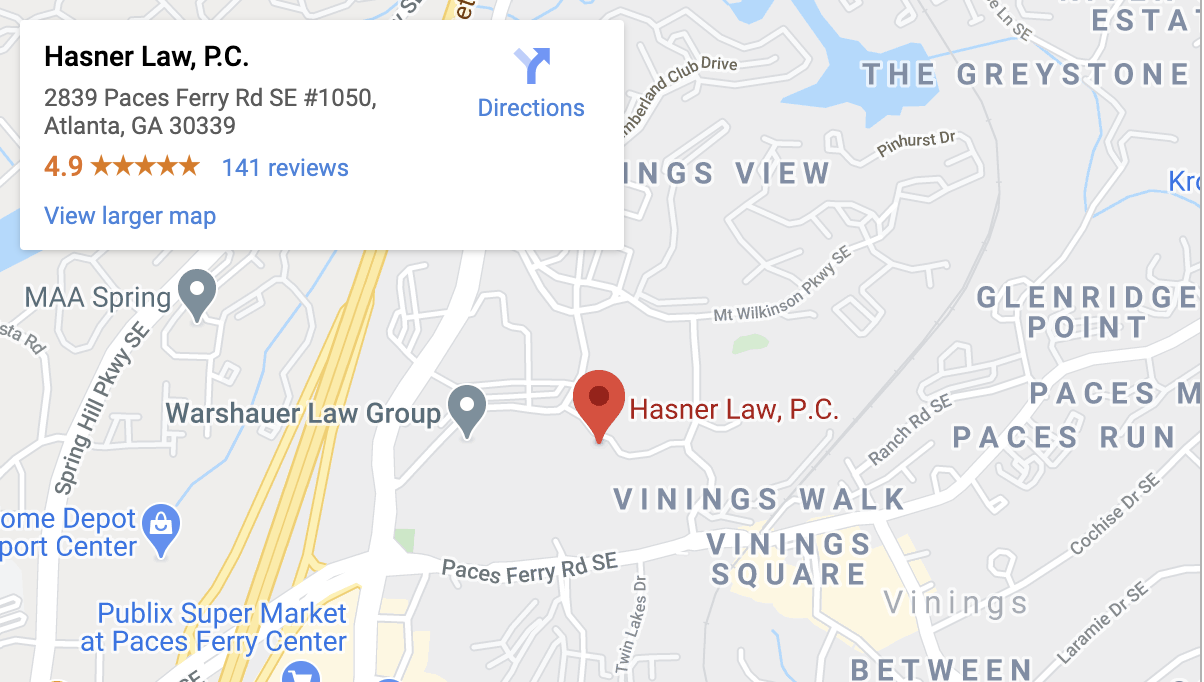
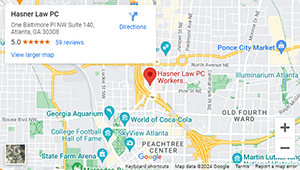
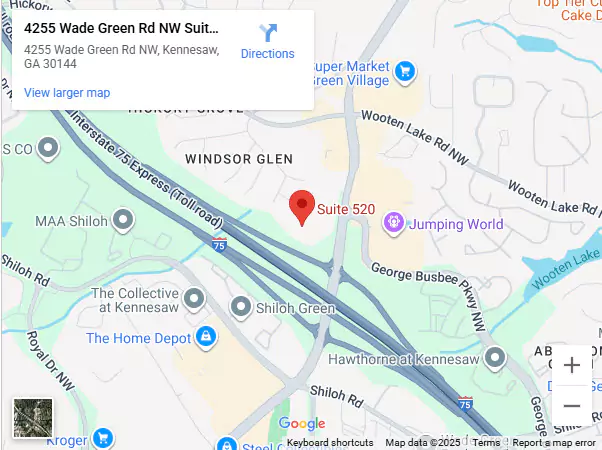
Hasner Law handles occupational disease claims for workers across Atlanta, Savannah, Kennesaw, and communities throughout Georgia. No Fee Unless We Win. Call 678-888-4878 to talk through where your claim stands before the deadline moves any closer.