

Stephen Hasner | Slip and Fall | June 9, 2026
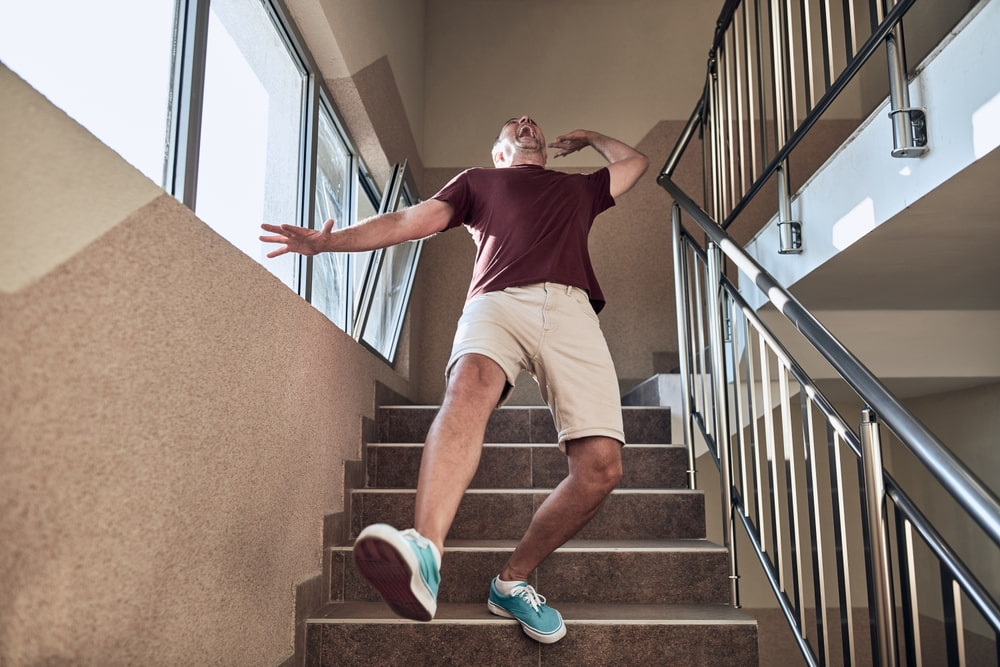
Most people who fall on someone else’s property in Atlanta assume the owner is automatically at fault. That assumption is wrong.
Georgia premises liability law ties a property owner’s liability directly to what they knew about the hazard, when they knew it, and what they did about it. The specific hazard matters, but the owner’s awareness of it matters more.
Slip and fall hazards in Atlanta can include wet grocery store floors, unsafe restaurant walkways, cracked parking lots, broken stairs, poor lighting, loose mats, and hidden building defects caused by poor maintenance.
No matter what caused the fall, the main legal question is often the same: did the property owner have notice of the danger and fail to take reasonable action?
An Atlanta slip and fall lawyer can review what happened, identify the hazard, look for evidence of notice, and determine whether the property owner’s negligence may support a claim.
What common slip and fall hazards can make Atlanta property owners liable?
Common Atlanta slip and fall hazards include wet retail floors, cracked sidewalks, poorly lit stairwells, uneven parking surfaces, and loose mats in commercial buildings.
Property owners in Georgia become liable for these hazards under O.C.G.A. § 51-3-1 when they know about a dangerous condition, or have reasonable time to discover it, and fail to correct it or warn visitors.
Key Takeaways About Slip and Fall Hazards and Property Owner Liability in Atlanta
- A property owner in Georgia is not automatically liable because you fell on their property. Liability depends on whether the owner knew about the hazard or had reasonable time to discover it.
- The type of hazard and how long it existed before your fall are two of the strongest factors in a Georgia premises liability claim.
- Georgia’s comparative negligence rule under O.C.G.A. § 51-12-33 may reduce your compensation if the property owner argues you share fault for the fall.
- Slip and fall evidence disappears fast. Stores clean spills, landlords repair defects, and surveillance footage gets overwritten within days.
- Filing a claim against government-owned property in Georgia requires a separate written notice before you may file a lawsuit.
How Does a Property Owner Become Liable for a Slip and Fall Under Georgia Law?
A property owner in Georgia becomes liable for a slip and fall injury when they fail to address a hazardous condition they knew about or had reason to discover through reasonable inspections.
O.C.G.A. § 51-3-1 places a duty of ordinary care on property owners and occupiers to keep their premises safe for lawful visitors.
Actual Notice vs. Constructive Notice
Georgia premises liability claims hinge on the concept of notice. The table below breaks down how these two types of notice work in practice and how they apply to common Atlanta slip and fall hazards.
| Actual Notice | Constructive Notice | |
| Definition | The owner directly knew the hazard existed | The hazard existed long enough that a reasonable inspection would have revealed it |
| How it is proven | Tenant complaints, employee reports, prior falls at the same location, written maintenance requests | Time-stamped surveillance footage, inspection logs showing gaps, testimony about how long the condition was visible |
| Common Atlanta examples | A grocery store employee reports a spill but no one mops it; a tenant emails the landlord about a broken stairwell light | A puddle from a leaking cooler sits in a store aisle for over an hour during business hours with no staff response |
| Strength in court | Very strong. Direct knowledge is difficult for the owner to dispute. | Depends on timeline. The longer the hazard sat unaddressed, the stronger the argument. |
The distinction between actual and constructive notice often determines whether a premises liability claim in Georgia moves forward or gets dismissed. Proving which type applies requires documentation, and that documentation has a short shelf life.
An Atlanta slip and fall lawyer sends preservation notices to the property owner demanding they retain surveillance footage, inspection logs, and incident reports before that evidence disappears.
What Indoor Slip and Fall Hazards Create Liability for Atlanta Property Owners?
Indoor slip and fall hazards in Atlanta buildings create property owner liability when the owner knows about a maintenance failure and leaves it unresolved.
Unlike a sudden spill, many indoor hazards reflect ongoing neglect that strengthens a premises liability case because the owner had extended time to act.
Retail Store Hazards
Retail store slip and fall incidents in Atlanta frequently involve conditions that store employees either created or failed to address during their shifts.
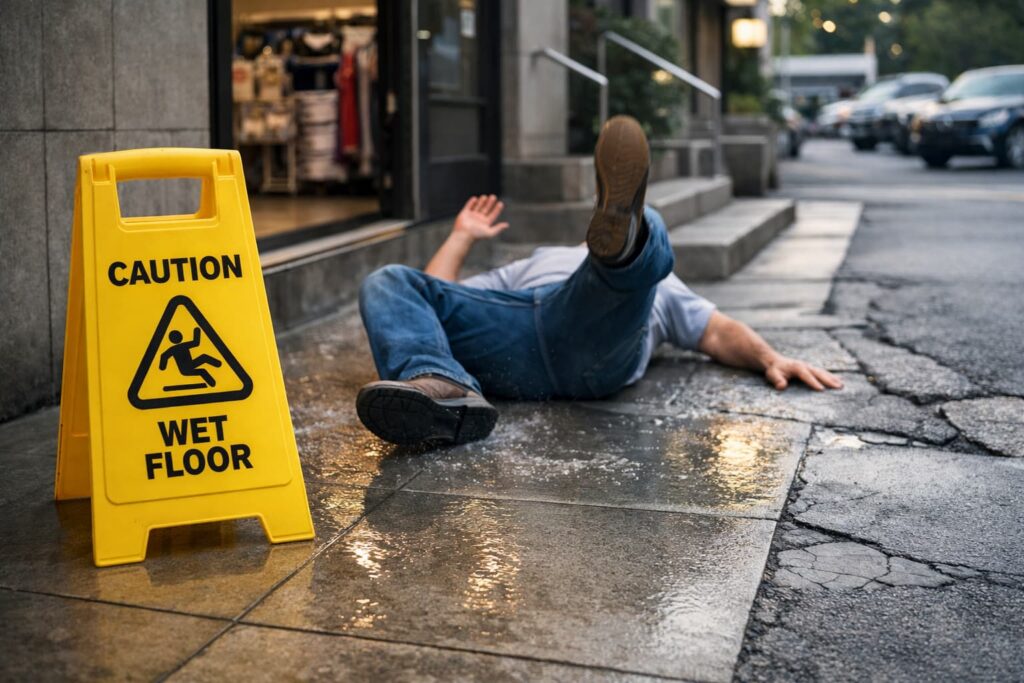
Grocery stores, big-box retailers, and shopping centers at Lenox Square, Atlantic Station, and Phipps Plaza all produce these claims.
- Liquid from broken containers, leaking refrigerator cases, or produce displays that drips onto tile flooring without cleanup
- Recently mopped floors where staff failed to place a “Wet Floor” sign or removed the sign before the surface dried
- Merchandise, shipping boxes, or restocking pallets left in customer walkways
- Torn or bunched entrance mats that catch the edge of a shoe
- Electrical cords running across customer paths near checkout areas or seasonal displays
Georgia law does not require the injured person to identify the exact moment a spill appeared. The longer a hazard sat unaddressed during operating hours, the stronger the constructive notice argument becomes.
Apartment and Office Building Hazards
Landlords and commercial building owners in Atlanta owe a duty of care to tenants and their guests.
Broken handrails on stairwells, burned-out hallway lighting, warped flooring from unrepaired water leaks, and loose carpet or vinyl transitions between rooms are all conditions that develop over time.
When tenants submit maintenance requests about these problems and the owner delays repairs for weeks or months, those written requests become evidence of actual notice.
That paper trail is often the strongest piece of a premises liability claim against an Atlanta landlord.
Restaurant and Hospitality Hazards
Grease buildup near kitchen exits, water tracked from bar areas onto hard flooring, and uneven transitions between indoor dining rooms and outdoor patios all create slip risks.
Atlanta’s restaurant density along the BeltLine, in Midtown, and across Buckhead means these hazards appear in premises liability cases throughout Fulton County.
How Do Outdoor Conditions Create Slip and Fall Liability in Atlanta?
Outdoor slip and fall hazards in Atlanta create property owner liability when sidewalks, parking lots, and walkways deteriorate and the owner ignores them.
Atlanta’s climate, aging infrastructure, and heavy foot traffic in commercial areas all contribute to outdoor hazard formation.
Sidewalk and Walkway Defects
Tree root damage, settling soil, and deferred concrete repairs create raised edges and cracked surfaces on walkways across metro Atlanta. These trip hazards become especially dangerous at night when combined with poor lighting.
A property owner who knows about a broken sidewalk section and leaves it unrepaired for weeks has a weak defense against a premises liability claim.
Parking Lot Deterioration
Potholes, crumbling asphalt, faded striping, standing water from clogged drains, and oil buildup near drive-through lanes all turn parking lots into fall zones. Commercial property owners are responsible for maintaining their parking surfaces.
Deferred paving and drainage repairs are among the most common sources of outdoor premises liability claims in Atlanta.
Weather-Related Hazards
Atlanta does not see heavy snowfall, but freezing rain and ice storms create dangerous conditions on stairs, walkways, and parking surfaces across Fulton, DeKalb, and Cobb counties.
Property owners must take reasonable steps to treat icy surfaces or warn visitors about the conditions. Standing water from broken gutter systems and clogged drainage creates a year-round hazard that many owners leave unaddressed until someone gets hurt.
An outdoor hazard becomes a liability issue the moment the owner has enough time to fix the condition and chooses not to.
If you fell due to a known outdoor defect on someone else’s property, speaking with an Atlanta slip and fall lawyer protects your claim before the owner repairs the hazard and eliminates the physical evidence.
Does Georgia’s Comparative Fault Rule Change a Slip and Fall Case?
Yes, Georgia’s modified comparative negligence rule under O.C.G.A. § 51-12-33 directly affects every slip and fall claim.
If the property owner argues that you share responsibility for the fall, your compensation is reduced by your percentage of fault. At 50% or more fault, Georgia law bars recovery entirely.
Common Comparative Fault Arguments in Atlanta Slip and Fall Cases
Property owners and their insurers rarely accept full responsibility after a fall. Their defense strategy almost always includes an attempt to shift a portion of blame onto the person who fell.
- Claiming you were distracted by your phone and failed to notice a visible hazard
- Arguing that your footwear had no traction and contributed to the fall
- Asserting that the hazard was open and obvious, meaning you assumed the risk by walking through or near it
- Pointing to warning signs or barriers that they claim provided adequate notice of the danger
Georgia courts apply the concept of equal knowledge in premises liability cases. If the hazard was just as visible to you as it was to the owner, the defense may argue you had no right to assume the area was safe.
An Atlanta slip and fall lawyer counters that argument with evidence of the owner’s superior knowledge, inadequate warnings, or failure to provide a safe alternative path.
What Rules Apply to Slip and Fall Claims on Government Property in Atlanta?
A slip and fall on government-owned property in Georgia requires an extra procedural step before you may file a lawsuit. Georgia’s ante litem notice statute requires you to send formal written notice to the government entity within a specific timeframe.
What Ante Litem Notice Requires
Ante litem notice is a written demand that identifies who you are, when and where the fall occurred, the nature of your injuries, and the compensation you are seeking. For claims against the City of Atlanta, this notice goes to the city’s governing body.

For falls at Metropolitan Atlanta Rapid Transit Authority (MARTA) stations or on property maintained by the City of Atlanta Department of Public Works, the notice requirements may differ.
Missing the ante litem deadline may permanently bar your claim, regardless of how strong your evidence is. This procedural requirement catches many people off guard because it does not apply to claims against private property owners.
An Atlanta slip and fall lawyer familiar with government liability claims handles the ante litem notice process and meets every procedural deadline on your behalf.
Ask Hasner Law
I slipped on a wet floor at a store and there was no warning sign. Does that mean the store is liable?
Not automatically, but the absence of a “Wet Floor” sign is strong evidence that the store failed to warn visitors about a known hazard.
Liability still depends on whether the store knew about the spill or had enough time to discover it. Inspection logs, surveillance footage, and employee statements help establish that timeline.
What if the hazard that caused my fall was already fixed by the time I thought about filing a claim?
The fact that the property owner repaired the hazard after your fall does not eliminate your claim.
Your attorney may prove the condition existed through prior maintenance records, photographs, surveillance footage, and witness testimony.
Under Georgia’s rules of evidence, post-accident repairs are generally not admissible, but other evidence may establish the hazard independently.
I fell in the parking lot of my apartment complex in Atlanta. Is my landlord responsible?
Your landlord may be responsible if they knew about the parking lot defect or had reasonable time to discover it and failed to act.
Maintenance requests you submitted, prior complaints from other tenants, and the property’s repair history all factor into whether the landlord had notice.
Georgia law treats tenants as invitees in common areas, which means landlords owe the highest duty of care in those spaces.
FAQs for Atlanta Slip and Fall Hazards
Does a specific type of hazard automatically qualify for a premises liability claim in Georgia?
No, no single hazard type automatically qualifies. Whether a wet floor, cracked sidewalk, or loose handrail gives rise to a valid claim depends on the property owner’s notice and response.
A hazard that the owner knew about and ignored for days is far more actionable than one that appeared moments before the fall.
How do photographs help prove a slip and fall claim in Atlanta?
Photographs taken at the scene provide direct visual evidence of the hazard, lighting conditions, the absence of warning signs, and the surrounding area.
Time-stamped photos from your phone establish when the hazard was present and what it looked like before the property owner cleaned it up or made repairs.
Even photos taken hours or a day after the fall may still capture useful evidence if the condition persists.
What if nobody saw me fall?
Witness testimony strengthens a slip and fall claim, but it is not required to move forward.
Surveillance footage, incident reports, medical records documenting your injuries, and the property’s maintenance history may all support your case.
If employees or other visitors were present but did not directly see the fall, they may still testify about the condition of the hazard before or after the incident.
Does the presence of a warning sign protect the property owner from liability?
Not in every case. A warning sign may reduce the property owner’s liability, but it does not eliminate it entirely.
If the sign was placed in an area where visitors had no safe alternative path, or if the hazard persisted for an unreasonable time despite the warning, the owner may still bear responsibility. The adequacy of a warning depends on the specific facts of each case.
Is a landlord liable if a visitor, not a tenant, falls in the building’s common area?
Generally yes. Georgia law treats visitors to a tenant’s unit as invitees in the building’s common areas, such as hallways, stairwells, lobbies, and parking lots.
The landlord owes the same duty of ordinary care to visitors as they do to tenants in those shared spaces.
If a visitor falls due to a condition the landlord knew about and failed to fix, the landlord may face liability under O.C.G.A. § 51-3-1.
Take the Next Step on Your Atlanta Slip and Fall Hazard Claim

The hazard that caused your fall may not stay the same for long. Stores may clean up spills, landlords may make repairs, and parking lots may get repaved.
The longer you wait to save evidence, the harder it may be to prove what happened. Waiting may also make the property owner’s defense stronger.
If a property owner’s negligence caused your slip and fall in Atlanta, Hasner Law’s premises liability attorneys review the facts, identify the hazard, and determine whether the owner had notice.
Call (678) 888-4878 today to find out where your claim stands.
