

Stephen Hasner | Car Accidents | September 18, 2026
A Georgia holiday car accident claim often begins with a phone call from an insurance adjuster while the injured person is still figuring out what happened.
Holiday accident claims in Georgia frequently involve drivers who live in another state, vehicles the drivers do not own, and insurance policies the injured person may not have known applied.
Sorting that out matters because the wrong assumption in the first week may affect the claim months later.
Reviewing the specific facts of a holiday car accident claim with a Georgia attorney may clarify who is liable, which insurance policies may apply, and what to do about the adjuster who keeps calling.
Key Takeaways About Georgia Holiday Travel Accident Claims
- Holiday crashes may raise added insurance, jurisdiction, and liability questions.
- Georgia’s modified comparative negligence rule may reduce damages by the plaintiff’s percentage of fault and generally bars recovery when the plaintiff is 50 percent or more responsible.
- Georgia generally provides two years to file a personal injury lawsuit, subject to exceptions.
- Uninsured and underinsured motorist coverage on your own auto policy may become relevant when the at-fault driver has no insurance or too little coverage.
- Drunk driving may support a compensatory damages claim and, in qualifying cases, a claim for punitive damages under Georgia law.
Georgia holiday travel accident claims generally involve the same personal injury rules as any other Georgia car accident, but the mix of out-of-state drivers, rental cars, rideshare vehicles, and impaired drivers may create insurance and liability issues that need extra review. Georgia gives most personal injury plaintiffs two years to file a lawsuit, and multiple insurance policies may apply depending on the vehicles and drivers involved.
Why Are Georgia Holiday Travel Accident Claims Different?
Georgia holiday travel accident claims may involve interstate travelers, impaired drivers, fatigued motorists, rental vehicles, rideshares, and unfamiliar insurance policies. Those factors may affect proof, fault, available coverage, or the identity of liable parties.
The Traffic Mix During Holidays
Thanksgiving, Christmas, and New Year’s car accidents in Georgia often involve drivers who do not live in the state.
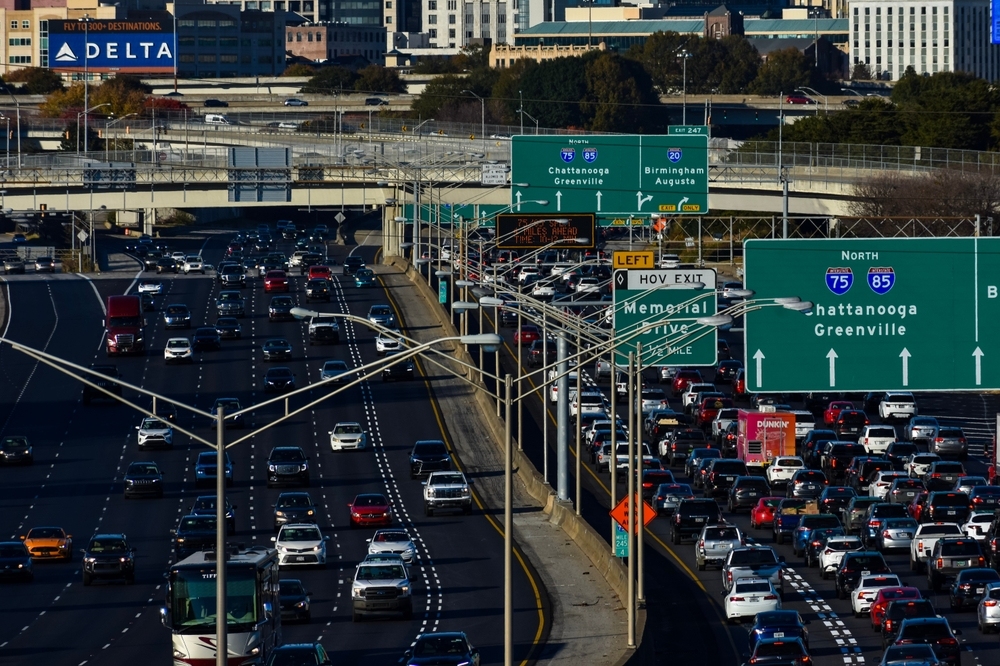
Heavy holiday traffic on Interstate 75, Interstate 85, Interstate 20, and Interstate 16 brings vehicles from Florida, the Carolinas, Tennessee, and Alabama through Georgia.
That mix may affect what insurance applies and how service of process is handled if a lawsuit becomes necessary.
The Impairment and Fatigue Factor
Drunk driving accidents during the holidays are a well-documented concern for law enforcement. Distracted driving and fatigued driving accidents may also occur during long-distance holiday travel, particularly when motorists spend extended periods on the road.
Each of these driver-behavior issues may affect the strength of a negligence claim and, in some cases, the availability of punitive damages.
What Steps Matter After You Are Home and Safe?
The steps that matter after you are home and safe from a Georgia holiday crash generally focus on protecting the medical record, preserving evidence, and avoiding decisions that may affect the claim later.
Practical steps that may protect a holiday car accident claim once you are home include:
- Following through with recommended medical care and keeping every appointment documented.
- Saving photographs from the scene, dashcam footage, witness statements, and repair estimates.
- Requesting the crash report from the Georgia State Patrol or the responding local agency.
- Keeping records of lost income, transportation costs, and other expenses connected to the injury.
- Avoiding signing any release or settlement paperwork from an insurer before consulting a lawyer.
A file that starts with careful documentation is generally stronger than one where records are reconstructed months later.
Who May Be Liable for a Georgia Holiday Travel Accident?
Liability for a Georgia holiday travel accident may rest with another driver, more than one driver, an employer in specific circumstances, or another party whose independent conduct contributed to the crash. Georgia law generally requires proof of negligence.
Common potentially liable parties include another driver whose conduct caused the collision, a commercial driver who violated safety rules, or an employer when Georgia law supports liability for the employee’s on-duty conduct.
Liability against a business generally depends on the facts and does not attach automatically because a company vehicle or driver was involved.
What Happens If You Were Partly at Fault?
Georgia uses a modified comparative negligence framework under O.C.G.A. § 51-12-33, which may reduce damages based on the plaintiff’s percentage of fault. A plaintiff who is 50 percent or more responsible generally may not recover damages.
A person with $100,000 in damages who is found 20 percent responsible may see the award reduced to $80,000. The same person found 40 percent responsible may see the award reduced to $60,000. At 50 percent or more, the recovery generally goes to zero.
What If the Other Driver Lives Outside Georgia?
An out-of-state driver accident in Georgia does not end the injured person’s claim, but it may add procedural steps.
The at-fault driver may return home within days of the crash, and pursuing the claim generally requires complete insurance information and proper service under the applicable rules.
Georgia’s Nonresident Motorist Act may allow service on a nonresident driver whose vehicle was involved in a Georgia crash, subject to statutory requirements. Insurance and choice-of-law questions may also come up depending on where the driver’s policy was issued.
Georgia law does not automatically govern every issue simply because the crash occurred in Georgia.
What If the Driver Has No Insurance or Too Little Insurance?

A Georgia uninsured motorist claim may become relevant when the at-fault driver has no liability coverage or too little coverage to pay for the injuries.
Under O.C.G.A. § 33-7-11, uninsured and underinsured motorist coverage on your own auto policy may respond depending on the policy language, elections, and coverage type selected at purchase.
Using your own coverage does not mean you caused the collision. Not every Georgia motorist automatically has usable UM or UIM coverage, and policy specifics matter.
How Does Drunk Driving Affect a Georgia Holiday Accident Claim?
Drunk driving may support a compensatory damages claim and, in qualifying cases, a claim for punitive damages under Georgia law. Punitive damages under O.C.G.A. § 51-12-5.1 requires a heightened legal showing of aggravating conduct.
Georgia law contains an exception to the usual statutory cap on punitive damages for certain cases involving impaired judgment caused by alcohol or specified intoxicants.
Whether that exception applies depends on the facts and evidence of impairment. Punitive damages do not automatically arise from every DUI crash.
What Compensation May Be Available After a Georgia Holiday Crash?
Compensation after a car accident in Georgia depends on the facts of the crash, the strength of the evidence, and the applicable insurance. Types of damages that may be available include:
- Past and future medical expenses, including emergency care, surgery, and ongoing treatment.
- Lost wages and reduced future earning capacity when the injury affects the ability to work.
- Property damage covering vehicle repairs or replacement.
- Pain and suffering damages reflecting the physical and emotional effects of the injury.
- Wrongful death damages under Georgia law in fatal cases, and punitive damages in qualifying cases.
No specific settlement amount is predictable from a general article, and no lawyer can guarantee an outcome.
How Long Do You Have to File a Georgia Car Accident Lawsuit?
Georgia generally gives a person two years to file a personal injury lawsuit under O.C.G.A. § 9-3-33. That two-year period is generally the lawsuit deadline and is not automatically the same as the deadline for submitting an insurance claim.
Special circumstances may alter the time available. Government defendants generally trigger separate ante litem notice requirements with shorter windows. Minors, wrongful death matters, and pending criminal proceedings may affect timing.
Why Might Holiday Travel Require a Broader Insurance Review?
Holiday travel often requires a broader insurance review because the vehicles and drivers involved may fall under multiple insurance policies. Potential insurance sources on a Georgia holiday travel accident claim may include:
- The at-fault driver’s personal liability insurance.
- Uninsured or underinsured motorist coverage on the injured person’s own auto policy.
- Commercial vehicle insurance when a truck or company vehicle was involved.
- Employer coverage when the at-fault driver was acting within the scope of employment.
- Rideshare coverage during an active trip period or rental car company coverage in certain circumstances.
Not every listed source applies in every crash. Missing an available policy layer may materially affect what the injured person recovers.
Common Holiday Crash Situations and Claim Issues
| Holiday crash situation | Claim issue that may need review |
| Drunk driver | Negligence, DUI evidence, and possible punitive damages |
| Out-of-state driver | Jurisdiction, service, and applicable insurance |
| Multi-car collision | Fault allocation among multiple drivers |
| Uninsured driver | Uninsured motorist coverage |
| Driver with low policy limits | Underinsured motorist and other coverage |
| Rideshare crash | Driver status and applicable policy period |
| Rental-car crash | Driver insurance and rental-related coverage |
| Commercial truck crash | Driver conduct, company liability, and commercial insurance |
| Passenger injured | Claims against one or more negligent drivers |
| Hit-and-run crash | Police documentation and possible uninsured motorist coverage |
When Might Legal Help Be Particularly Useful?
Legal help on a Georgia holiday car accident claim may be particularly useful when the facts create uncertainty about fault, insurance, or liable parties. Situations where a lawyer may add substantive value include:
- The at-fault driver lives out of state and may be difficult to reach or serve.
- The driver had no insurance or minimum coverage that will not cover the injuries.
- The crash involved a commercial vehicle, rental car, or rideshare vehicle.
- The insurer is disputing fault or has offered an early settlement before medical treatment is complete.
- The crash was fatal and the family is pursuing a wrongful death claim.
Each of these situations generally requires analysis that goes beyond the initial adjuster call.
How Hasner Law May Help After a Georgia Holiday Travel Accident
Hasner Law has served injured people across Georgia since 2008. Our lawyers help clients work through the coverage, liability, and communication issues that holiday accident claims routinely raise. These crashes may involve out-of-state motorists, borrowed vehicles, rentals, rideshares, or several insurance policies, each of which may affect liability and coverage.
We may review every applicable insurance policy, handle communications with the at-fault driver’s insurer while you focus on medical treatment, and evaluate whether multiple policies may respond.
Our cases are handled on a contingency basis. No Fee Unless We Win. The attorney fee comes from any recovery obtained, and clients may remain responsible for case expenses under the fee agreement.
FAQs for Georgia Holiday Travel Accident Claims
Do I have to talk to the other driver’s insurance company after a holiday crash?
You generally do not have to give a recorded statement to the at-fault driver’s insurance company. You may have obligations under your own auto policy to cooperate with your own insurer, which is a separate issue.
May a passenger bring a claim after a Georgia holiday crash?
Yes, a passenger injured in a Georgia holiday crash generally may bring a claim against the driver or drivers whose negligence caused the collision. The claim may involve the driver of the vehicle the passenger was in, another driver, or both.
What if a family member let me borrow their car for holiday travel and I was hit?
The owner’s auto insurance generally follows the vehicle in Georgia, meaning coverage may apply to a driver using the vehicle with permission. Your own auto policy may also provide coverage in some circumstances. Which policy responds depends on the facts and policy language.
Does a hit-and-run holiday crash still allow a claim?
Yes, a hit-and-run holiday crash may still support a claim, generally through uninsured motorist coverage on the injured person’s own auto policy. Reporting the crash to police promptly and preserving evidence generally strengthens a hit-and-run claim.
May a family bring a wrongful death claim after a fatal holiday crash?
Yes, Georgia law generally allows specific surviving family members to bring a wrongful death claim after a fatal crash. Georgia measures wrongful death damages by the full value of the life of the person who died. Time deadlines apply.
Get Clarity on Your Georgia Holiday Travel Accident Claim

A Georgia holiday travel accident claim often turns on decisions made in the first few weeks, when insurance adjusters are calling, out-of-state drivers may be leaving the state, and the injured person is still figuring out the medical picture.
An early claim review may identify additional insurance coverage and disputed liability issues before settlement discussions advance too far. Hasner Law has served injured people across Georgia since 2008.
Call 678-888-4878 to discuss the circumstances of your Georgia holiday travel accident claim. No Fee Unless We Win.