

Stephen Hasner | Construction Accidents | March 21, 2026

Construction site electrocution is one of the most serious hazards workers face in Atlanta. Electrical injuries may cause severe burns, nerve damage, and other complications that require medical treatment and time away from work.
On many Atlanta job sites, workers encounter energized equipment, temporary wiring, and overhead power lines that create significant risk when safety rules are not followed.
After an electrical injury, workers often want to know who may be liable for the accident. Construction electrocution cases often involve several contractors working on the same project, along with federal safety regulations and Georgia workers’ compensation laws.
Understanding how liability works may help injured workers and their families evaluate the options available after a workplace accident.
Key Takeaways About Construction Site Electrocution and Atlanta Liability
- In Atlanta construction site electrocution cases, liability may fall on general contractors, subcontractors, property owners, equipment manufacturers, or utility companies. More than one company may share legal responsibility for the same electrocution accident.
- OSHA’s electrical safety standards under 29 CFR 1926.416 place direct obligations on employers to protect workers from electrical hazards. A documented violation may serve as evidence of negligence in a Georgia civil claim.
- Georgia law under O.C.G.A. § 34-9-8 treats general contractors as statutory employers of their subcontractors’ workers, meaning injured employees may pursue workers’ compensation benefits up the contracting chain.
- A subcontractor’s employee may have grounds for a third-party personal injury lawsuit against another company on the same site, separate from any workers’ comp claim.
Why Construction Workers Face High Electrocution Risk on Atlanta Job Sites
Atlanta’s construction industry drives a large portion of the metro area’s economy. High-rise projects in Buckhead, mixed-use developments along the BeltLine, commercial builds in Midtown, and infrastructure work near Hartsfield-Jackson all create job sites where electrical hazards are present daily.
The sheer volume of active projects means more workers face exposure to energized power lines, temporary wiring, and aging electrical systems.
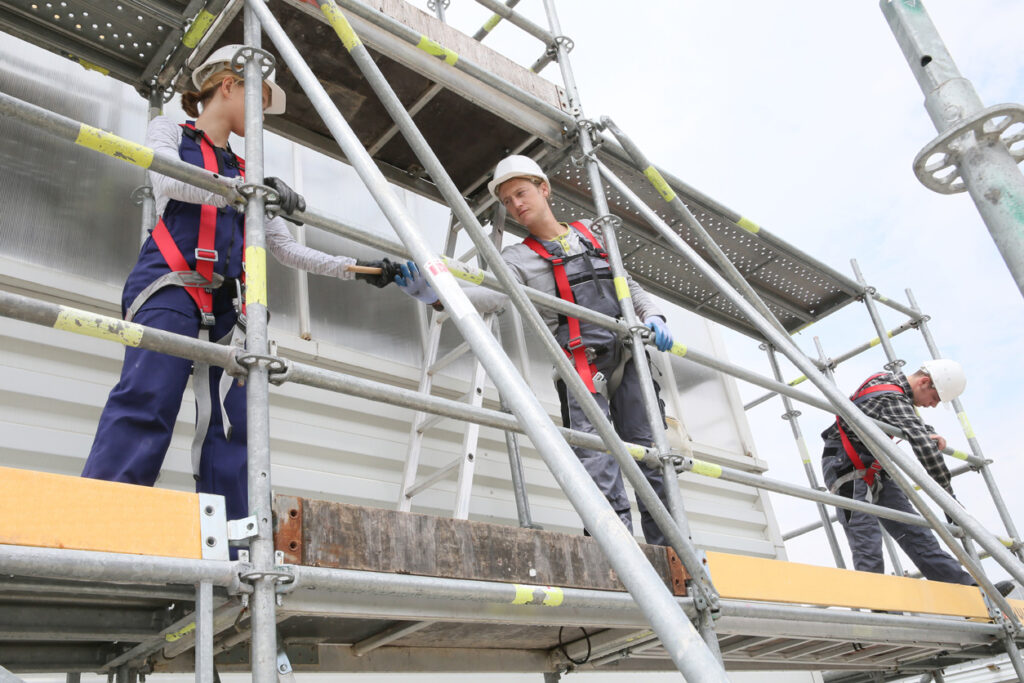
The Most Common Electrical Hazards on Georgia Construction Sites
Several recurring conditions lead to electrical injuries on Atlanta-area job sites. The following hazards appear frequently in OSHA investigations and Bureau of Labor Statistics data:
- Contact with overhead power lines while operating cranes, scaffolding, or aerial lifts
- Failure to de-energize circuits before beginning work near electrical panels
- Missing or broken ground-fault circuit interrupter (GFCI) protection on temporary power systems
- Damaged extension cords, frayed wiring, and improperly maintained power tools
- Inadequate lockout/tagout procedures that leave equipment energized during maintenance
Each of these hazards reflects a failure somewhere in the chain of responsibility. Federal safety regulations exist specifically to prevent these conditions, and when those rules are broken, injured workers have a right to ask who failed to follow them.
How Do OSHA Electrical Standards Affect Construction Electrocution Liability in Atlanta?
OSHA’s electrical safety rules for construction are found in 29 CFR 1926 Subpart K. These rules explain how employers must protect workers from electrical hazards on construction sites.
Section 1926.416 requires employers to protect workers from energized electrical circuits. Employers must turn off the power, ground equipment, use insulation, or put other safety measures in place.
Section 1926.417 covers lockout and tagging procedures used to control electrical energy during work.
When an OSHA Violation Supports a Negligence Claim in Georgia
An OSHA violation does not automatically prove negligence in a civil lawsuit, but it may serve as important evidence. Georgia courts have allowed plaintiffs to introduce OSHA violations as proof that a party failed to meet the standard of care owed to workers on the site.
If a general contractor or subcontractor received an OSHA citation for an electrical safety violation tied to the same conditions that caused your injury, that record may strengthen your case. The distinction matters because workers’ compensation does not require proof of fault, but a third-party personal injury lawsuit does.
When OSHA has already documented a safety failure, the injured worker’s attorney may use that finding to build the negligence argument against the responsible party. This is one reason preserving OSHA records and inspection reports early in the process matters so much.
Who Bears Liability for a Job Site Electrocution in Atlanta?
Liability for construction electrocution in Atlanta depends on the relationships between the parties on the project and the specific facts of the incident. Multiple defendants may share responsibility, and the legal path to recovery looks different depending on whether you pursue workers’ comp benefits, a third-party lawsuit, or both.
When the General Contractor Is Liable for an Electrocution
The general contractor typically holds the most control over site conditions, safety protocols, and the coordination of subcontractors. Under Georgia law, a general contractor may be held liable as a statutory employer for the injuries of a subcontractor’s employee through O.C.G.A. § 34-9-8.
The statute extends workers’ compensation responsibility beyond the direct employer. Principal contractors, intermediate contractors, and subcontractors may all be liable for benefits. A general contractor’s liability often stems from one or more of the following circumstances:
- Failing to coordinate electrical safety across multiple subcontractors on the same site
- Allowing work near energized power lines without proper de-energization or barriers
- Hiring an uninsured subcontractor, which triggers statutory employer obligations
- Ignoring known electrical hazards documented during site inspections
If your direct employer (the subcontractor) lacks workers’ compensation insurance or becomes insolvent, the general contractor may bear the obligation to pay your benefits.
In many Georgia construction cases, the general contractor qualifies as a statutory employer, which may prevent a separate negligence lawsuit against that contractor under the exclusive remedy doctrine. However, exceptions exist, and the specific facts of the project matter.
Subcontractor Responsibility for Electrocution Injuries
Subcontractors have their own duty to protect their workers from electrical hazards. A subcontractor that fails to follow OSHA standards, provide proper training, or maintain safe equipment may bear direct responsibility for a construction electrocution accident.
Subcontractor electrocution and workers’ comp in Atlanta often raises the question of whether the injured worker may also sue a different subcontractor on the same site.
Georgia’s exclusive remedy doctrine under O.C.G.A. § 34-9-11 generally bars an employee from suing their own employer in tort for a workplace injury.
However, a worker employed by one subcontractor may have grounds to file a personal injury lawsuit against a different subcontractor whose negligence caused the electrical hazard. That distinction opens a second avenue for recovery beyond workers’ compensation.
Property Owners, Equipment Manufacturers, and Utility Companies
Liability for a construction electrocution depends largely on the relationships among the companies involved in the project, as well as the specific facts surrounding the incident. In certain circumstances, any of the following parties may share responsibility:
- Property owners who knew about dangerous electrical conditions on the premises but failed to address them or warn workers
- Manufacturers that produced defective electrical equipment, tools, or machinery that malfunctioned and caused the injury
- Utility companies that failed to de-energize or properly mark power lines near active construction zones
These third-party claims fall under Georgia’s general negligence and product liability laws, and they carry a two-year statute of limitations from the date of the injury. Identifying every potentially liable party early in the process gives your attorney the best chance of building a complete case.
What Happens When a Subcontractor’s Employee Sues Another Party on an Atlanta Job Site?
One of the most common questions after a construction electrocution accident involves whether an injured subcontractor’s employee may sue a party other than their own employer.
Georgia’s workers’ compensation system provides a no-fault remedy, but it also limits the amount and type of benefits available. A personal injury lawsuit against a third party may allow the injured worker to pursue damages that workers’ comp does not cover.
Damages Available Through a Third-Party Electrocution Claim
A successful third-party personal injury lawsuit related to a job site electrocution may result in compensation beyond what workers’ comp provides. The types of damages that may be available include:
- Medical expenses not fully covered by workers’ compensation
- Lost earning capacity if the injury prevents you from returning to your previous trade
- Pain and suffering related to the electrical injury and its long-term effects
- Loss of enjoyment of life when the injury limits daily activities
The right to bring a third-party claim exists alongside the workers’ compensation claim, and the two processes move forward on separate tracks. An Atlanta electrocution injury lawyer familiar with both systems may help you pursue the full range of recovery options available under Georgia law.
How Hasner Law Helps Atlanta Construction Workers After an Electrocution Injury
Getting electrocuted on a job site often means a long recovery, mounting medical bills, and real uncertainty about your income. The insurance company tied to your employer’s workers’ comp policy might push back on the benefits you need. And when multiple contractors operate on the same project, figuring out who to hold accountable gets complicated fast.
A Firm Built Around Georgia Workers’ Compensation
Hasner Law Injury & Workers’ Compensation Attorneys brings more than 100 years of combined legal experience to injured workers in Atlanta, Savannah, and across Georgia. The firm’s founding attorney, Stephen Hasner, co-founded the Georgia Injured Workers’ Advocates (GIWA) and has dedicated his career to fighting for employees hurt on the job.

A former Administrative Law Judge who presided over more than 500 cases at the State Board of Workers’ Compensation is also part of the team.
What the Firm Does for Construction Electrocution Cases
When you bring your case to Hasner Law, the legal team investigates the full scope of what happened. That process looks different for every client, but it typically involves several key steps:
- Reviewing OSHA citations and inspection records tied to the job site
- Identifying every contractor, subcontractor, and third party involved in the project
- Gathering medical records and documenting the full extent of your electrical injuries
- Determining whether a third-party negligence claim exists alongside your workers’ comp case
- Handling all communication with insurance adjusters and opposing counsel
Having an attorney manage these moving parts allows you to focus on your recovery instead of fighting with an insurance company. The firm takes workers’ compensation cases on a contingency-fee basis, so you pay nothing unless the firm recovers benefits on your behalf. You also get direct access to your attorney and case manager, and the staff assists clients in both English and Spanish.
FAQs for Construction Site Electrocution Atlanta Liability
Who is responsible when a construction worker gets electrocuted on a job site in Atlanta?
Liability may fall on the general contractor, a subcontractor, the property owner, an equipment manufacturer, a utility company, or a combination of these parties. The answer depends on who controlled the conditions that caused the electrical hazard and whether any party violated OSHA safety standards or Georgia law.
Does an OSHA violation prove negligence in a Georgia electrocution lawsuit?
An OSHA violation does not automatically prove negligence, but Georgia courts may allow it as evidence that a party failed to meet the applicable standard of care. A documented violation of 29 CFR 1926.416 or related electrical safety rules may strengthen a personal injury claim tied to the same conditions.
If my subcontractor employer has workers’ comp insurance, may I still sue the general contractor?
In many Georgia construction cases, the general contractor qualifies as a statutory employer under O.C.G.A. § 34-9-8, which may bar a tort lawsuit under the exclusive remedy doctrine. However, the specific facts of the project and the contracting relationships matter. If the general contractor does not meet the statutory employer definition and their negligence caused the injury, a separate personal injury claim might be available.
What types of compensation might I receive after a construction site electrocution in Atlanta?
Workers’ compensation may cover medical bills, a portion of lost wages, disability benefits, and vocational rehabilitation. If a third-party personal injury claim is also available, you may pursue additional damages including pain and suffering, full lost earning capacity, and loss of enjoyment of life.
How long do I have to file a claim after a construction site electrocution in Georgia?
For workers’ compensation, you must report the injury to your employer within 30 days under O.C.G.A. § 34-9-80 and file a formal claim within one year under O.C.G.A. § 34-9-82. For a third-party personal injury lawsuit, Georgia’s statute of limitations is two years from the date of the injury.
Take Action After a Construction Site Electrocution in Atlanta

Liability for a construction electrocution injury almost never rests on one party alone, and waiting too long to investigate the facts may limit your options. Witnesses leave the job site, conditions change, and filing deadlines under Georgia law move quickly.
The workers who face these injuries on sites across metro Atlanta need someone who knows how Georgia’s overlapping systems of liability actually work. Speak with a Hasner Law construction accident attorney today for a free consultation and start building your case.
