
Atlanta Pedestrian Accident Lawyer
A driver hit you while you were walking, and the driver’s insurer is already circling the question of whether you did something wrong. That framing gets set in the first 48 hours, and it tends to stick unless someone pushes back with the actual law.
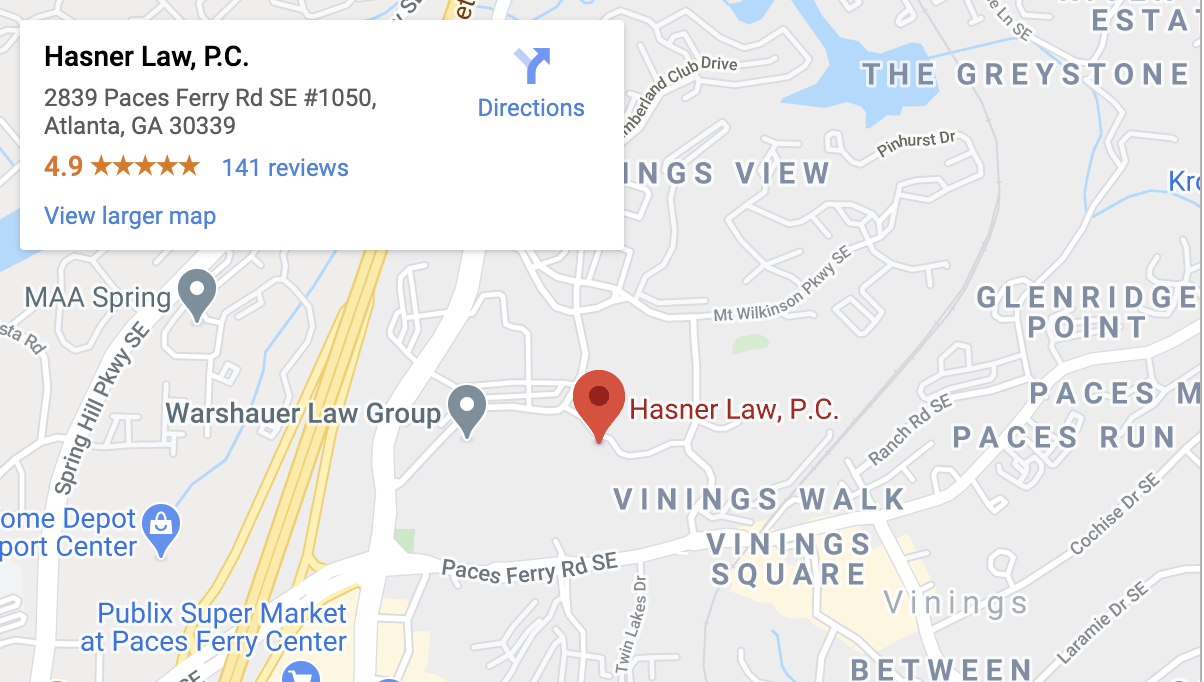
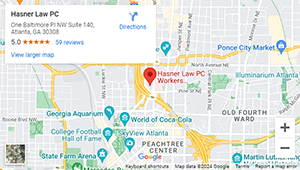
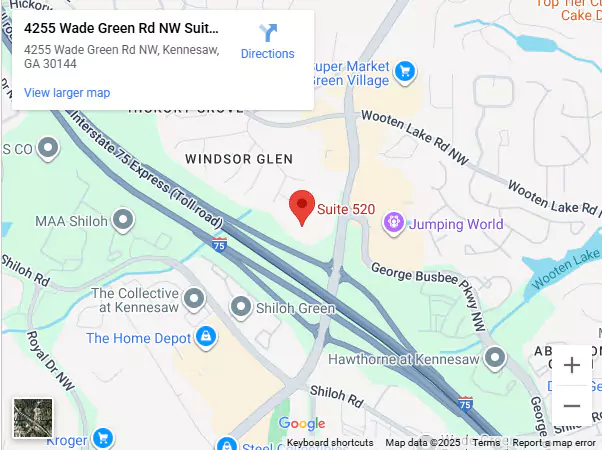
Georgia gives pedestrians strong protections in and around crosswalks, and drivers owe specific duties when people are on foot near traffic. Hasner Law represents pedestrians hit by cars across Atlanta, Savannah, Kennesaw, and the rest of Georgia.
Our attorneys handle claims against at-fault drivers, hit-and-run drivers, rideshare drivers, and commercial vehicles, and we pursue every insurance source that may apply to the injured pedestrian.
Call 678-888-4878 before you give a recorded statement to any insurance company.
Why Injured Pedestrians in Metro Atlanta Call Our Firm
Pedestrian cases turn on trial credibility because insurers weigh the likelihood a case actually goes to a jury when they price it. That calculation is what our firm is built to influence.
Hasner Law has represented Georgia injury victims since 2008, and Stephen Hasner has practiced Georgia personal injury and workers’ comp law for more than 23 years.
Pedestrian files sit in the higher-exposure tier of injury work because the injuries tend to be catastrophic. Broken pelvises, traumatic brain injuries, spinal injuries, and internal trauma are common.
Adjusters know a serious pedestrian case may exceed the driver’s policy limits, and they may push comparative-fault arguments to bring the number down.
What changes when a pedestrian file is handled the way we handle them:
- We pursue crash reconstruction data, signal-timing records, and any nearby traffic camera footage before it gets overwritten.
- We identify every insurance policy that may apply, including UM/UIM coverage on the pedestrian’s own auto policy.
- We coordinate treatment with orthopedic and neurological specialists so the medical record supports the full injury picture.
- We push back on the reflexive fault-sharing that insurers may apply to pedestrians who were not in a marked crosswalk.
- We take pedestrian cases on contingency, meaning no attorney fee unless we recover for you. Clients may remain responsible for case expenses under the fee agreement.
The firm also includes a former workers’ compensation administrative law judge from the Georgia State Board, which matters on files where the pedestrian was on the clock when hit, such as delivery drivers, transit workers, and construction crew members struck near job sites.
What Does Georgia Law Say About Drivers and Pedestrians?
Georgia requires drivers to yield to pedestrians in crosswalks under specific circumstances and to exercise due care around anyone on foot near a roadway.
O.C.G.A. § 40-6-91 requires drivers to stop and remain stopped when a pedestrian is crossing within a marked or unmarked crosswalk in defined situations. Other traffic-control rules and pedestrian right-of-way statutes may also apply depending on the facts.

Related Georgia rules address overtaking a vehicle stopped for a pedestrian, driving on sidewalks, and the general duty to exercise due care. These duties apply on Peachtree Street the same as they apply on a residential street in Grant Park or Kirkwood.
Common driver conduct that shows up in Atlanta pedestrian cases includes:
- Failing to yield at a crosswalk with a walk signal
- Turning right on red without checking for pedestrians in the crosswalk
- Speeding through a school zone or residential area
- Distracted driving involving a phone
- Passing a vehicle stopped for a pedestrian
A statutory violation may support a negligence-per-se theory when the legal requirements are met, but the injured pedestrian must still prove causation and damages, and the driver may raise available defenses.
Georgia pedestrian statutes may also impose duties on the pedestrian that affect the fault analysis.
What If the Driver Had No Insurance or Left the Scene?
Your own auto insurance may cover the injury through uninsured or underinsured motorist coverage, even though you were on foot, depending on the policy language and the facts.
UM/UIM coverage may protect an insured pedestrian, but coverage turns on the policy terms, insured status, exclusions, and notice and cooperation requirements.
Georgia allows two general types of UM/UIM coverage:
- Traditional or reduced UM/UIM, which applies when the at-fault driver had no insurance or insufficient insurance below your limit.
- Added-on UM/UIM, which may be available in addition to the at-fault driver’s liability limits, subject to policy terms and proven damages.
The difference between the two matters. A pedestrian with $100,000 of added-on UIM coverage hit by a driver with $25,000 in liability coverage may have a larger recoverable amount than one with traditional UIM at the same limit, depending on the damages and policy terms.
A household member’s policy may also provide coverage if the injured pedestrian qualifies as an insured under that policy. Coverage depends on the specific policy terms and household residency facts, so a policy review by counsel is worth doing early.
Call 678-888-4878 to have every applicable policy reviewed before an adjuster tells you nothing more is available.
How Do Insurers Fight Pedestrian Accident Claims in Atlanta?
Insurers fight pedestrian claims by pushing comparative fault onto the pedestrian, because Georgia’s modified comparative negligence rule bars recovery if the injured party is 50 percent or more at fault. That is the single largest tactic in this area of law.

The typical adjuster script targets specific facts:
- The pedestrian was not in a marked crosswalk
- The pedestrian crossed against a signal
- The pedestrian was wearing dark clothing at night
- The pedestrian looked at a phone before stepping into the road
- The pedestrian had been drinking
Each of these arguments has a legal counter, and none automatically defeats a claim. Georgia law still requires drivers to exercise due care regardless of what a pedestrian was wearing or where a pedestrian was walking.
Whether the driver met the applicable duty often depends on the disputed facts and may be decided by a jury if the case goes that far.
Recorded statements are the other main tactic. An adjuster may call within days of the crash and ask questions designed to pin down a version of events before the injured pedestrian has medical clarity or legal advice.
Do not give a recorded statement to the driver’s insurer without talking to a lawyer first.
Which Insurance Policies Pay in an Atlanta Pedestrian Accident?
Payment may come from whichever insurance source is available and applicable, and often more than one at the same time. The chart below shows common sources and what they generally cover in a pedestrian case.
| Insurance Source | When It May Apply | What It May Cover |
| At-fault driver’s liability policy | Driver caused the crash | Medical bills, lost wages, pain and suffering up to policy limits |
| Pedestrian’s UM/UIM coverage | Driver uninsured, underinsured, or unknown | Bodily injury damages subject to policy terms |
| Household resident UM/UIM policy | Pedestrian qualifies as an insured | Bodily injury damages under that policy’s UM/UIM terms |
| Commercial policy | Delivery van, Uber, Lyft, or company vehicle | Higher liability limits when applicable |
| Workers’ comp | Pedestrian was working when hit | Medical care and wage benefits without proving fault |
The rideshare rule matters in Atlanta specifically. Uber and Lyft policies generally include a $1 million liability layer while the driver is on an active trip, subject to the policy terms and the driver’s status at the moment of the crash.
That coverage may come into play in Midtown, Buckhead, and the airport corridor where rideshare activity is heavy.
Where Do Most Atlanta Pedestrian Accidents Happen?
Pedestrian crashes in the Atlanta metro tend to cluster on high-traffic arterials with limited crosswalks, at intersections with heavy turning movements, and along transit corridors.
Buford Highway is a well-known pedestrian safety concern because of its multi-lane design and long distances between marked crossings.
Other locations that produce steady pedestrian claim volume include Peachtree Street through Midtown and Downtown, Ponce de Leon Avenue near the BeltLine, North Highland Avenue in Virginia-Highland, and Piedmont Avenue near the park. MARTA station approaches see foot traffic mixing with vehicles making bus and rideshare pickups.
Time of day and weather affect risk. Fall and winter evenings bring earlier darkness and higher pedestrian exposure, especially during the commuter window. Afternoon summer thunderstorms produce sudden visibility drops that may show up in the crash record.
Where the crash happened affects the legal analysis. A pedestrian in a marked crosswalk with a walk signal generally has the strongest position.
A pedestrian at an unmarked crosswalk at an intersection may still have significant statutory protection under Georgia law. A pedestrian mid-block on a busy arterial faces harder facts but is not automatically at fault.
What Should You Do After a Pedestrian Accident in Atlanta?

If you are hit by a car in Atlanta, prioritize medical care, then protect the claim. Steps to take once you are safe and evaluated include:
- Get medical evaluation and follow up on all recommended care.
- Report the crash to police and obtain the report number.
- Photograph the scene, vehicles, injuries, and any traffic signals or signage.
- Preserve the clothing and shoes you were wearing at the time.
- Collect names and contact information for witnesses.
- Avoid giving a recorded statement to the driver’s insurer until you have counsel.
Preservation and documentation matter because pedestrian cases often turn on the specific mechanics of the crash and the pedestrian’s location at impact. Small facts recorded early may become decisive later.
What Damages Can a Pedestrian Recover in Georgia?
Georgia allows a pedestrian hit by a car to recover economic and non-economic damages, and punitive damages in limited cases involving aggravating conduct. Recovery depends on the injury severity, the wages lost, the medical care required, and the available insurance.
Recoverable damages in an Atlanta pedestrian injury case commonly include:
- Past and future medical expenses, including surgery, rehabilitation, and long-term care
- Lost wages and diminished earning capacity when the injury affects the ability to work
- Pain and suffering, which is often substantial in pedestrian cases because of injury severity
- Loss of consortium for a spouse
- Punitive damages in limited cases involving aggravating conduct, such as impaired driving
- Wrongful death damages if the pedestrian did not survive
Pedestrian cases sit at the higher end of injury value because of the physics involved. A person on foot hit by even a slow-moving vehicle absorbs the full force with no crumple zone, seatbelt, or airbag. That severity is one reason the fault dispute matters so much to insurers.
How Long Do You Have to File a Pedestrian Accident Claim in Georgia?
You generally have two years from the date of injury to file a personal injury lawsuit under O.C.G.A. § 9-3-33, and two years from the date of death for a wrongful death case. Missing that deadline generally ends the claim regardless of how strong the underlying facts may be.
Claims involving government entities may have special notice requirements and shorter deadlines. Municipal claims, such as those against the City of Atlanta, generally require ante litem notice within six months.
County claims generally follow a different presentment period, and claims against Georgia state entities generally require notice within a longer window.
Claims involving MARTA or other public authorities require entity-specific review, because the notice rules that apply depend on the nature of the defendant.
The more immediate concern is preserving evidence. Traffic-camera footage may be overwritten within days or weeks, depending on the operator, and vehicle data can be lost if the car is repaired or scrapped. Witnesses may also have difficulty recalling details as time passes, so early preservation efforts can help document what happened.
Call 678-888-4878 so preservation letters may go out before the record disappears.
FAQs for Atlanta Pedestrian Accident Lawyer
Do I need a lawyer if I was hit by a car in Atlanta and the driver had insurance?
Generally yes, you may need a lawyer if you were hit by a car in Atlanta even when the driver has insurance. Insurers may push comparative fault onto pedestrians to reduce the payout, and pedestrian injuries often exceed minimum policy limits.
Can I still get money if the police report says I was partly at fault?
Yes, you may still recover if the police report says you were partly at fault, as long as you were less than 50 percent responsible under Georgia’s modified comparative negligence rule.
Police reports are not the final word on fault, and they may be challenged with witness statements, camera footage, and reconstruction evidence.
What should I do if the driver who hit me drove off?
You may still recover through your own UM coverage if the driver who hit you left the scene. Hit-and-run and unidentified-vehicle claims may involve specific statutory and policy requirements, so early legal and policy review matters.
Report the crash to police right away to preserve the claim.
How much does an Atlanta pedestrian accident lawyer cost?
Nothing upfront at Hasner Law. Pedestrian injury cases are handled on contingency, meaning the attorney fee comes only from a recovery. Clients may remain responsible for case expenses under the fee agreement. Consultations are free.
Can I sue if I was hit by an Uber or Lyft driver while walking?
Yes, you may sue if you were hit by an Uber or Lyft driver while walking in Atlanta. Rideshare policies generally include a higher liability layer while the driver is on an active trip and reduced coverage during the app-on standby period.
Which policy applies depends on the driver’s status at the moment of the crash.
What if my child was hit by a car walking to school in Atlanta?
You may bring a claim on behalf of your child if a driver hit them walking to school. Georgia’s statute of limitations for a minor’s injury claim generally does not begin to run until the child turns 18, but evidence preservation makes early action important.
Get the Insurance Picture Mapped Before the Adjuster Frames the Case

The first insurance call after a pedestrian crash usually comes from the driver’s insurer, and its opening move is to shape the fault narrative before anyone independent has looked at the file. That framing rarely favors the pedestrian, and it gets harder to unwind the longer it sits.
A pedestrian accident attorney in Atlanta may map every applicable policy, pursue preservation of intersection footage, and put the driver’s insurer on notice that the case is being built for trial rather than a quick discount settlement. That posture may change how the number gets calculated on the other side of the table.
Reach Hasner Law at 678-888-4878 to talk through what happened and what insurance sources may apply.