Atlanta Construction Accident Lawyer
Most hurt construction workers in Atlanta file a workers’ comp claim and stop there. That is often a mistake.
Georgia law may let you pursue workers’ compensation through your employer and a separate lawsuit against a third party whose negligence contributed to the injury and who is not protected by workers’ compensation immunity.Missing that second claim can leave real money on the table.
For many injured tradespeople, temporary total disability benefits replace only part of what they earned before the accident, generally two-thirds of their average weekly wage up to the state maximum.
On a busy Atlanta job site with a general contractor, half a dozen subcontractors, and rental equipment from outside vendors, more than one insurance policy may owe you money.
Call 678-888-4878 before signing anything from an insurance adjuster.
Why Injured Construction Workers Across Georgia Call Hasner Law
Hasner Law has represented Georgia workers and injury victims since 2008, and construction files sit at the exact intersection of the two practice areas we handle every day. Workers’ compensation and personal injury law usually live in separate firms. At our firm, they live down the hall from each other.
Stephen Hasner founded the firm and has practiced Georgia workers’ comp and personal injury law for more than 23 years. He co-founded Georgia Injured Workers’ Advocates and previously co-chaired the Workers’ Compensation Law Institute. He is licensed in Georgia and Florida and has spent his career on the injured worker’s side of these files.
Our workers’ comp team also includes a former administrative law judge from the Georgia State Board of Workers’ Compensation who presided over more than 500 cases from the bench.
That is the person now sitting on your side of the table when we push back on a denied claim, a lowball settlement, or a suitable-employment fight.
What that combination changes on a construction file:
- We open both tracks at the same time so the workers’ comp claim protects your income while the third-party investigation preserves evidence.
- We coordinate medical care so it supports both the comp claim and the injury lawsuit without one undercutting the other.
- We handle lien issues between the workers’ compensation insurer and any third-party recovery, which can affect the client’s net recovery.
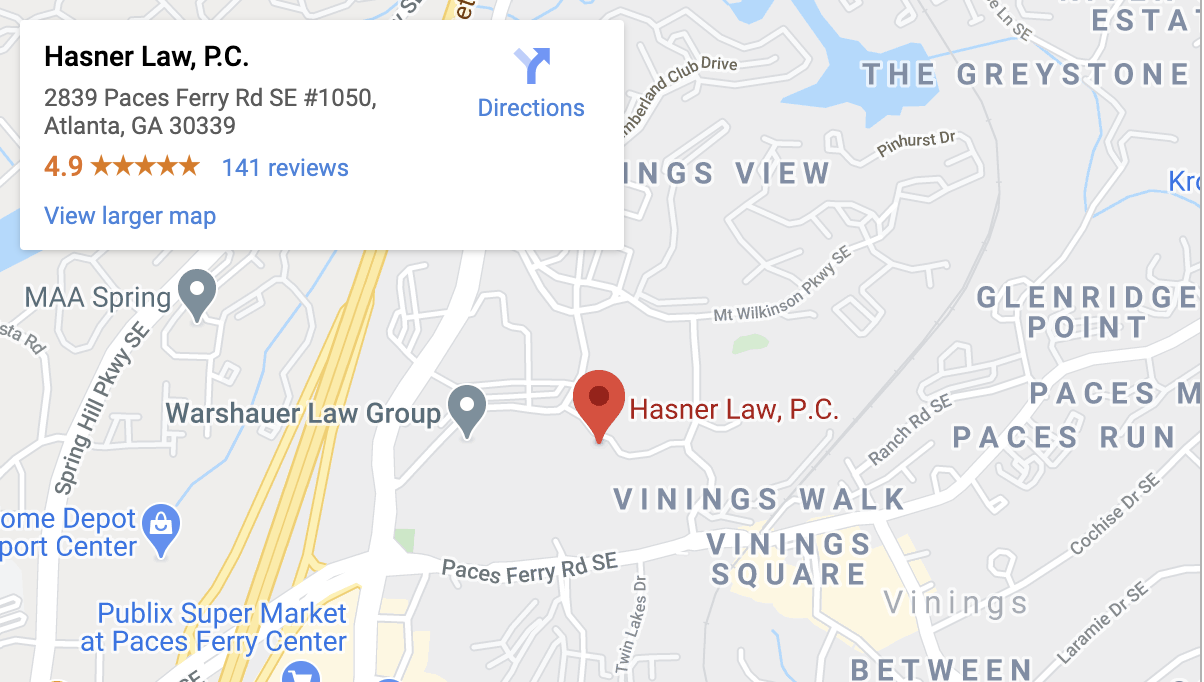
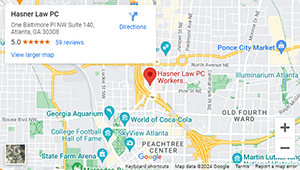
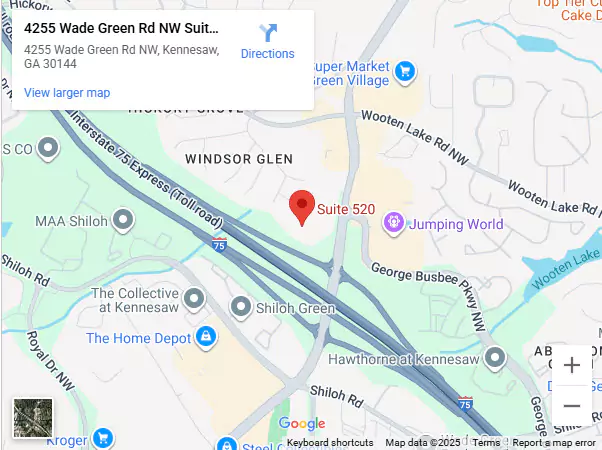
- We serve Atlanta, Savannah, Kennesaw, and clients across Georgia on a contingency basis, meaning no fee unless we win.
The firm handles construction cases involving roofers, ironworkers, electricians, framers, HVAC crews, concrete finishers, laborers, and equipment operators. If you were hurt on a metro Atlanta site and are not sure what you have, call 678-888-4878 for a free case review.
Who Actually Pays When You Get Hurt on an Atlanta Job Site?
Payment usually comes from more than one source. Your employer’s workers’ comp insurer covers medical care and part of your lost wages regardless of fault. A third-party defendant may owe additional damages if their negligence caused your injury.
On a typical Atlanta job site, several companies share the space. A general contractor manages the project. Subcontractors handle framing, electrical, roofing, HVAC, and finish work.
Equipment rental companies supply lifts and scaffolds. Property owners hire the whole operation. When another company creates the hazard that hurt you, that company may face a separate lawsuit if it is not protected by workers’ compensation immunity.

Third-party defendants often include:
- General contractors that are not protected by workers’ compensation immunity and whose negligence contributed to the injury
- Subcontractors whose crew created the hazard that injured you
- Equipment manufacturers when a scaffold, harness, or power tool failed
- Property owners who ignored known dangers on the site
- Delivery drivers or crane operators employed by outside companies
Sorting out who created the hazard is where these cases are won or lost. On a Midtown high-rise, a West Midtown mixed-use build, or a Douglas County data center project, the answer is rarely obvious in the first week.
How Georgia Workers’ Comp and a Third-Party Lawsuit Compare
Workers’ compensation and a third-party claim pay for different things and follow different rules. The chart below shows how the two paths differ for a construction injury in Georgia.
| Factor | Georgia Workers’ Comp | Third-Party Lawsuit |
| Who pays | Employer’s WC insurer | Negligent third party’s insurer |
| Fault required | No | Yes |
| Medical bills | Covered | May be recovered |
| Lost wages | Two-thirds of average weekly wage, capped | Full past and future lost earnings |
| Pain and suffering | Not available | Available |
| Loss of consortium for spouse | Not available | Available |
| Time to file | 30 days to report, 1 year to file claim | Generally 2 years from injury |
| Trial option | No, decided by administrative judge | Yes, jury trial available |
The two claims run at the same time. A third-party recovery may raise a workers’ compensation lien issue, although Georgia law generally limits the insurer’s recovery unless the worker has been fully and completely compensated.
What Are the Most Common Atlanta Construction Accident Types?
Falls, struck-by incidents, electrocutions, and caught-between accidents cause most serious injuries on Atlanta construction sites.
The federal Occupational Safety and Health Administration (OSHA) calls these the Focus Four hazards because they account for the majority of construction deaths nationwide.
Scaffolding and Ladder Falls
Falls remain the leading cause of construction fatalities in the United States, according to the Bureau of Labor Statistics. Atlanta’s summer heat and afternoon thunderstorms add specific risk.
A scaffold plank slick with rain, or a worker fatigued after hours in ninety-degree humidity, changes what should have been a routine climb into a serious injury. Common scaffold and ladder claims involve:
- Missing or defective guardrails on frame scaffolds
- Improper anchoring of suspended scaffolds on high-rise projects
- Damaged planks that a rental company failed to inspect
- Ladders set on uneven or unsecured ground
- Overloaded platforms holding more workers or material than rated
A scaffolding accident lawyer in Atlanta looks first at who assembled the scaffold, who inspected it, and who supplied it. Any of those parties may share liability outside the workers’ comp system.
Falling Objects and Struck-By Injuries

Struck-by injuries happen when tools, materials, or debris fall from height. On a Buckhead tower crane project or an infill build inside the perimeter, a single dropped wrench from twenty stories up carries deadly force. OSHA requires toe boards, screens, and debris nets for exactly this reason.
Electrocutions
Electrocutions often involve energized lines a crew was told were dead, overhead power contact by boom lifts, or damaged extension cords on wet slabs. Georgia Power’s lines run through most active build zones in the metro area, and lockout-tagout failures show up regularly in these files.
Caught-Between and Trench Collapses
Caught-between injuries include trench collapses, equipment rollovers, and workers pinned by pipe or steel. Trench work on utility and site-prep jobs in Fulton, Cobb, and Gwinnett counties produces some of the most severe injuries we see.
What Does OSHA Compliance Have to Do With Your Case?
OSHA violations by a general contractor or subcontractor may support a third-party negligence claim, even though OSHA citations themselves do not automatically prove fault.
Federal law sets minimum safety standards for construction sites, and Georgia courts often look to those standards when deciding what reasonable care required.
Key OSHA rules that come up in Atlanta construction cases include:
- Fall protection standards requiring guardrails, safety nets, or personal fall arrest systems above six feet
- Scaffolding standards covering design, capacity, and inspection
- Excavation and trenching rules requiring protective systems below five feet
- Personal protective equipment requirements for head, eye, and hand hazards
- Hazard communication standards for chemicals on site
If OSHA investigated your accident, the citations, photos, and interviews from that investigation may become useful evidence in a third-party case. Getting those records early matters because the site itself will not stay frozen.
Crews move on, subcontractors demobilize, and the exact configuration that injured you disappears within days.
How Much Is a Georgia Construction Injury Case Worth?

Construction injury case value depends on the severity of the injury, the wages lost, the medical care required, and whether a viable third-party claim exists.
Workers’ comp alone caps wage benefits at two-thirds of your average weekly wage, subject to a state maximum set by the Georgia State Board of Workers’ Compensation. A third-party claim may expand recovery well beyond those limits.
Factors that drive value include:
- Whether the injury is permanent, and to what degree
- Whether you can return to your prior trade
- Future medical care, including surgeries and long-term therapy
- Lost earning capacity, not just lost wages to date
- Pain and suffering, available only through the third-party case
- A spouse’s loss of consortium claim
No lawyer can promise a number. What a lawyer can do is make sure every source of recovery gets pursued, so the final figure is not artificially capped by a workers’ comp settlement signed too early.
How Long Do You Have to File a Construction Injury Claim in Georgia?
You generally have 30 days to report a workplace injury to your employer and one year to file a workers’ comp claim with the state board.
A third-party personal injury lawsuit in Georgia generally must be filed within two years of the injury under O.C.G.A. § 9-3-33. Wrongful death cases follow the same two-year window from the date of death.
These deadlines look generous until you factor in what has to happen inside them. Records must be gathered, experts retained, site conditions preserved, and defendants identified across a web of contractors and subcontractors. A file that sits for eighteen months rarely settles well.
FAQs for Construction Accident Lawyer Atlanta
Do I need a lawyer for a construction accident in Atlanta if I already have workers’ comp?
Generally yes, you may need a lawyer for a construction accident in Atlanta even if workers’ comp is already open.
Workers’ comp does not cover pain and suffering, full lost wages, or third-party liability. A lawyer looks at whether someone other than your direct employer contributed to the injury.
Can I sue the general contractor if I was hurt on their job site in Georgia?
It depends. In some cases, Georgia law may treat a general contractor as a statutory employer, which can give the contractor immunity from a personal injury lawsuit.
In other cases, a general contractor may be subject to a third-party claim if it is not protected by workers’ compensation immunity and its negligence contributed to the injury.
What does a construction accident lawyer cost in Atlanta?
Nothing upfront at Hasner Law. Personal injury and workers’ comp cases are handled on contingency, meaning the fee comes from the recovery. No recovery, no fee. Consultations are free.
Can I still recover if I was partly at fault for a construction accident in Georgia?
Yes, you may still recover under Georgia’s modified comparative negligence rule if you were less than 50% at fault. Recovery gets reduced by your share of fault. Workers’ comp benefits are not reduced for your own negligence.
What if a subcontractor’s crew caused my injury but I work for a different employer?
You may have a third-party claim against that subcontractor if it is not protected by workers’ compensation immunity and its negligence contributed to the injury.
If the injury is covered by Georgia workers’ compensation, benefits are generally pursued through the appropriate employer or statutory-employer coverage. The third-party case runs separately and may recover damages workers’ comp does not cover.
Protect the Third-Party Claim Before the Site Changes

Every day on an active Atlanta construction site changes the evidence. Crews finish out. Subcontractors leave. The scaffold that failed comes down. Insurance adjusters get involved fast, and their first calls are rarely in the worker’s interest.
Getting a construction injury attorney on the file early protects the site inspection, preserves the OSHA record, and identifies every company whose insurance policy may respond. It also stops the workers’ comp insurer from steering the medical care in a direction that hurts the third-party case later.
Call Hasner Law at 678-888-4878 to talk through your Atlanta construction accident case. Free consultations are available anytime.